Ever dreamed of playing AAA titles on your phone, without needing a super-powered gaming rig? That dream is rapidly becoming reality thanks to the explosive growth of cloud gaming services! These platforms stream games directly to your device, eliminating the need for expensive hardware and offering unprecedented access to a vast library of titles. But is it all sunshine and rainbows?
Let’s dive into the exciting world of cloud gaming, exploring its technology, triumphs, and the challenges it faces.
From market leaders carving out their dominance to the innovative tech powering this revolution, we’ll unpack everything from pricing models and user experiences to the future of gaming itself. We’ll examine how cloud gaming is reshaping the industry, impacting developers, publishers, and gamers alike. Get ready for a deep dive into a technology that’s changing how we play forever!
Market Overview of Cloud Gaming Services
The cloud gaming market is experiencing explosive growth, transforming how we access and enjoy video games. No longer tethered to powerful, expensive hardware, players can stream high-quality games to a variety of devices, opening up gaming to a much wider audience. This shift is driven by advancements in internet infrastructure, processing power, and the increasing popularity of subscription-based services.
Current Market Size and Growth Trajectory
The global cloud gaming market is substantial and rapidly expanding. While precise figures vary depending on the source and methodology, reports indicate a market valued in the billions of dollars, with projections showing consistent double-digit year-on-year growth for the foreseeable future. This growth is fueled by factors such as increasing internet penetration, particularly high-speed broadband, the rising affordability of smartphones and other smart devices, and the increasing appeal of subscription-based entertainment models.
For example, Newzoo’s market analysis consistently shows a strong upward trend, projecting significant increases in both revenue and user base within the next few years. This robust growth reflects a paradigm shift in the gaming industry, moving away from traditional hardware-centric models towards a more accessible and flexible cloud-based approach.
Major Players and Market Share
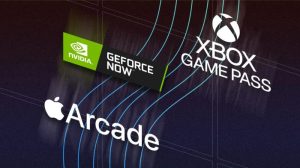
The cloud gaming landscape is populated by a mix of established tech giants and innovative startups. Key players include Nvidia GeForce Now, Google Stadia (though its game streaming service has been shut down, its technology and experience are still relevant to the market), Microsoft xCloud (integrated into Xbox Game Pass), Amazon Luna, and PlayStation Plus Premium (with its cloud streaming component).
Precise market share figures fluctuate, and obtaining definitive data is challenging due to the various reporting methods and the dynamic nature of the market. However, it’s generally accepted that Nvidia GeForce Now and Microsoft xCloud currently hold significant market shares, leveraging their existing user bases and strong brand recognition. The competitive landscape remains highly dynamic, with new entrants and evolving strategies constantly reshaping the market.
Business Models Employed by Cloud Gaming Service Providers
Cloud gaming service providers utilize several distinct business models to monetize their platforms. A common approach is the subscription model, offering access to a library of games for a recurring fee, similar to Netflix or Spotify. This model provides predictable revenue streams and encourages user retention. Another model involves a freemium approach, offering some games or features for free while charging for premium content or enhanced experiences.
Some providers also adopt a hybrid model, combining subscription fees with individual game purchases or add-on services. Finally, some platforms operate on a pay-per-play model, charging users for each individual game session. The choice of business model significantly impacts the platform’s pricing strategy, its appeal to different user segments, and its overall financial sustainability.
Comparison of Key Features of Major Cloud Gaming Platforms
The following table compares four major cloud gaming platforms, highlighting key features to help consumers make informed decisions:
| Feature | Nvidia GeForce Now | Microsoft xCloud (Xbox Game Pass) | Amazon Luna | PlayStation Plus Premium |
|---|---|---|---|---|
| Pricing | Subscription tiers with varying features and access | Included with Xbox Game Pass Ultimate subscription | Subscription tiers with different game channels | Included with PlayStation Plus Premium subscription |
| Game Library | Extensive library, constantly updated, access to player-owned games on Steam, Epic Games Store, etc. | Access to a rotating library of Xbox games | Offers a curated selection of games across different channels | Selection of PlayStation games, varies by region |
| Hardware Requirements | Minimum internet speed required, compatible devices include PCs, Macs, Android devices, and Shield TVs. | Compatible with Xbox consoles, PCs, Android and iOS mobile devices, and smart TVs | Requires compatible devices, including Fire TV, PCs, Macs, Android and iOS devices | Compatible with PlayStation consoles and some PC and mobile devices |
| Additional Features | Ray tracing support on compatible games, high-resolution streaming options. | Integration with Xbox ecosystem, cross-platform play, achievements | Integration with Amazon ecosystem, voice control features, dedicated game controllers. | Integration with PlayStation ecosystem, access to other PS Plus benefits |
Technology Behind Cloud Gaming Services
Cloud gaming, the magic of playing high-end games on less powerful devices, relies on a sophisticated interplay of hardware and software. It’s not just about uploading a game and hoping for the best; it’s a carefully orchestrated ballet of data compression, encoding, and transmission, all working in concert to deliver a smooth, responsive gaming experience. Let’s delve into the technological heart of this fascinating system.
The infrastructure supporting cloud gaming is a marvel of modern engineering. It requires powerful servers, high-bandwidth networks, and optimized software to handle the constant stream of data required for real-time gameplay. Imagine thousands of high-powered gaming PCs, each running multiple games simultaneously, all connected to a massive network capable of handling the immense data flow. This network needs to be incredibly reliable and low-latency to ensure a smooth gaming experience for all users.
Specialized hardware, such as high-end GPUs and CPUs, is crucial for rendering the game visuals and processing player inputs with minimal delay.
Game Streaming Process
The journey of a game from server to your screen is a complex process involving several key steps. First, the game server renders the game visuals. These visuals are then encoded into a compressed digital stream, significantly reducing the amount of data that needs to be transmitted. This compressed stream is then transmitted across the network to the client device (your phone, tablet, or PC).
The client device receives this stream, decodes it, and displays it on the screen. Simultaneously, the client device sends player input data (like button presses and joystick movements) back to the server, which processes these inputs and updates the game state accordingly. This entire cycle happens many times per second to create the illusion of real-time gameplay.
Latency and Quality Challenges
Delivering a seamless cloud gaming experience is challenging due to inherent limitations in network transmission speed and processing power. Latency, the delay between input and output, is a critical factor. High latency leads to noticeable lag, making the game feel unresponsive and frustrating to play. This delay is influenced by various factors, including network congestion, server load, and the distance between the server and the client.
Similarly, maintaining high-quality visuals at low bandwidth is a constant battle. High-resolution graphics and complex game environments require a substantial amount of data to transmit, making bandwidth limitations a significant hurdle. Efficient compression techniques are therefore vital to balance visual fidelity with bandwidth usage.
Comparison of Cloud Gaming Technologies
Several technologies are employed to optimize cloud gaming performance. Different compression techniques, such as H.264, H.265 (HEVC), and VP9, offer varying levels of compression efficiency and visual quality. H.265 generally offers better compression than H.264, allowing for higher quality visuals at lower bandwidth, but it requires more processing power to encode and decode. Similarly, various encoding methods are used to prepare the game visuals for transmission.
Adaptive bitrate streaming dynamically adjusts the quality of the stream based on network conditions, ensuring a smoother experience during periods of network congestion. Advanced techniques like spatial and temporal compression further reduce bandwidth requirements by eliminating redundant information from the video stream. These technologies are constantly evolving, with ongoing research focused on improving compression efficiency, reducing latency, and enhancing visual fidelity.
For example, Google Stadia initially used VP9, while NVIDIA GeForce Now employs various codecs depending on the game and network conditions.
User Experience and Adoption of Cloud Gaming
Cloud gaming, the delivery of video games over the internet, presents a compelling alternative to traditional gaming. It offers both exciting possibilities and significant challenges, impacting user experience and ultimately driving (or hindering) its adoption. Understanding these factors is crucial for the continued growth and refinement of this rapidly evolving industry.
The user experience in cloud gaming is a complex interplay of technical performance and perceived value. While offering unparalleled convenience and accessibility, it also faces hurdles related to latency, bandwidth requirements, and the inherent dependence on a stable internet connection. This section delves into the advantages and disadvantages from a user’s perspective, explores factors influencing adoption rates, analyzes user feedback, and proposes a survey to further investigate user satisfaction.
Advantages and Disadvantages of Cloud Gaming from a User Perspective
Cloud gaming offers several compelling advantages. The most significant is accessibility. Players can access a wide library of games on various devices – laptops, smartphones, tablets – without the need for expensive, high-powered hardware. This democratizes gaming, making it available to a broader audience. Furthermore, cloud gaming often provides a hassle-free experience, eliminating the need for lengthy downloads, updates, and complicated installations.
The subscription model simplifies the financial aspect, offering a predictable monthly cost instead of large upfront purchases for individual games.
However, disadvantages exist. Latency, or input lag, is a persistent issue. Delayed responses can significantly impact gameplay, especially in fast-paced games requiring precise timing. A reliable, high-speed internet connection is absolutely essential; without it, the experience becomes unplayable. Data caps and fluctuating bandwidth can also lead to frustrating interruptions.
Finally, the reliance on a third-party service introduces potential concerns regarding data privacy and security.
Factors Influencing User Adoption of Cloud Gaming Services
Several factors contribute to the adoption (or lack thereof) of cloud gaming. Cost is a major consideration; subscription fees, while often more affordable than purchasing individual games, can still be a barrier for some users. The availability of games is another key factor; a limited game library compared to traditional platforms might deter players. Technical limitations, such as latency and internet dependency, also play a significant role.
User perception of the overall experience – whether it is deemed enjoyable and convenient – strongly influences adoption rates. Marketing and awareness campaigns also play a vital part in attracting new users.
Analysis of User Reviews and Feedback on Popular Cloud Gaming Platforms
Analyzing user reviews on platforms like Steam, Reddit, and dedicated gaming forums reveals recurring themes. Positive reviews frequently highlight the convenience and accessibility of cloud gaming, emphasizing the ability to play games across multiple devices. Negative reviews, conversely, often cite issues with latency, inconsistent performance due to internet connectivity problems, and a limited game selection. Specific platforms receive varied feedback; some are praised for their extensive libraries, while others are criticized for their pricing models or technical limitations.
This nuanced feedback provides valuable insights for platform developers and contributes to the ongoing evolution of the cloud gaming experience.
User Survey to Gather Insights into User Satisfaction and Preferences
A comprehensive user survey can provide valuable quantitative data to supplement qualitative feedback. The survey would target current and potential cloud gaming users, gathering information on their demographics, gaming habits, and experiences with various platforms. Key questions would focus on aspects such as perceived latency, satisfaction with game selection, pricing acceptability, and overall user experience. The survey would incorporate a Likert scale for rating various aspects of the service, allowing for a statistical analysis of user satisfaction.
Open-ended questions would provide opportunities for users to elaborate on their experiences and provide detailed feedback. Data collected would help identify areas for improvement and inform future development of cloud gaming services.
The Future of Cloud Gaming Services
The cloud gaming landscape is poised for explosive growth, driven by advancements in technology and shifting consumer preferences. We’re moving beyond the early adopter phase, and the next few years will see significant changes in how games are accessed, played, and monetized. This section explores the key trends, challenges, and opportunities shaping the future of this exciting industry.
The convergence of several powerful technological forces will redefine the cloud gaming experience. Faster internet speeds, more powerful data centers, and innovative game development techniques are all contributing to a future where high-fidelity gaming is accessible to a wider audience than ever before.
Impact of Emerging Technologies
The rollout of 5G networks will be transformative. The significantly increased bandwidth and lower latency offered by 5G will eliminate a major hurdle for cloud gaming: lag. Imagine playing graphically intense games with virtually no delay, regardless of your location. This improved connectivity will also enable more complex and realistic game worlds, pushing the boundaries of what’s possible in cloud-based gaming.
Furthermore, edge computing will play a vital role. By processing data closer to the user, edge computing reduces latency even further, resulting in a smoother, more responsive gaming experience. This is particularly beneficial for users in areas with less robust internet infrastructure. Companies like Google and Microsoft are already investing heavily in edge computing infrastructure to support their cloud gaming platforms.
The result will be a more geographically distributed and resilient cloud gaming network, accessible even in remote locations.
Challenges and Opportunities
The cloud gaming industry faces significant challenges, primarily related to infrastructure costs, data security, and the need for consistent high-speed internet access. The high bandwidth requirements of streaming high-quality games necessitate substantial investment in server infrastructure and network capacity. Data security and privacy are paramount, requiring robust measures to protect user data from unauthorized access. The digital divide, where access to high-speed internet is unevenly distributed, remains a significant hurdle to widespread adoption.
However, these challenges also present opportunities. Companies that can successfully navigate these complexities will be well-positioned to capture a significant share of the growing market. Innovation in compression technologies, improved network optimization, and the development of more affordable and accessible hardware are key areas for future growth.
Evolution of Cloud Gaming Business Models
The current cloud gaming business models, primarily subscription-based services and individual game purchases, will likely evolve. We can expect to see more hybrid models emerge, combining subscription access with in-app purchases or microtransactions. The rise of cloud-based esports and competitive gaming will also drive the development of new business models, perhaps focusing on tournament entry fees, sponsorships, and virtual goods.
Imagine a future where players can seamlessly switch between different cloud gaming platforms, accessing their game libraries and progress across devices. This interoperability could significantly enhance the user experience and encourage broader adoption. Furthermore, the integration of cloud gaming with other entertainment platforms, such as streaming services and social media, could create new revenue streams and expand the reach of cloud gaming.
For example, a streaming service might offer a bundled subscription including access to a curated library of cloud-based games.
Online Games and Their Relation to Cloud Gaming
The rise of cloud gaming has profoundly impacted the online gaming landscape, offering new possibilities for both players and developers. By removing the need for powerful local hardware, cloud gaming democratizes access to high-fidelity online experiences, opening the door to a wider audience and reshaping how online games are created, distributed, and played.Cloud gaming’s influence extends far beyond simple accessibility.
It allows for seamless cross-platform play, consistent performance regardless of device, and innovative gameplay mechanics that were previously unimaginable. Let’s delve into the specifics of this evolving relationship.
Popular Online Games Well-Suited for Cloud Gaming
Many popular online games thrive in the cloud gaming environment. Games that demand high processing power and consistent frame rates, often found lacking on lower-end hardware, are ideal candidates. Examples include titles like
- Fortnite*, known for its vibrant graphics and large player base, and
- Rocket League*, a fast-paced game requiring precise controls and quick responses, both benefit greatly from cloud’s consistent performance. Other contenders include subscription-based MMOs like
- Final Fantasy XIV Online* which require significant bandwidth and processing, making cloud gaming an attractive option for many players. These games showcase the potential of cloud gaming to deliver premium online experiences to a wider range of devices and players.
Impact of Cloud Gaming on Online Game Development and Distribution
Cloud gaming has significantly altered the development and distribution pipelines for online games. Developers are now freed from the constraints of optimizing for specific hardware configurations. This allows for greater focus on gameplay mechanics and visual fidelity, leading to richer, more immersive experiences. Distribution is also simplified, as players can access games directly through a subscription service or browser, eliminating the need for physical copies or lengthy downloads.
This ease of access significantly reduces the barrier to entry for both players and developers. The potential for global reach is massively increased as the need for powerful personal devices becomes irrelevant.
Gameplay Experience Comparison: Traditional vs. Cloud Gaming
The gameplay experience between traditional consoles/PCs and cloud gaming platforms presents key differences. Traditional setups offer complete control over hardware and settings, potentially resulting in superior performance for high-end systems. However, cloud gaming provides consistent performance across a variety of devices, eliminating lag and ensuring smooth gameplay regardless of the player’s hardware capabilities. Latency, however, can be a deciding factor, with cloud gaming occasionally experiencing higher latency than local setups depending on internet connection quality and server proximity.
The convenience and accessibility of cloud gaming often outweigh the potential slight performance discrepancies for many players.
Factors Influencing Platform Choice for Online Gaming
The decision to opt for cloud gaming or traditional methods depends on several factors:
- Hardware Capabilities: Players with lower-end PCs or older consoles might find cloud gaming a more attractive option to access high-fidelity games.
- Internet Connectivity: A stable, high-speed internet connection is crucial for a smooth cloud gaming experience. Lag and poor performance can be significant drawbacks if the connection is unreliable.
- Cost: Cloud gaming typically involves subscription fees, while traditional gaming requires upfront hardware costs. The long-term cost-effectiveness needs to be considered.
- Game Library: The availability of desired games on the chosen cloud platform is a critical factor. Not all games are available on all cloud gaming services.
- Latency Sensitivity: Players who are highly sensitive to latency might prefer the lower latency of traditional setups, particularly for competitive games.
- Personal Preference: Ultimately, personal preference plays a significant role. Some players value the control and customization offered by traditional systems, while others prioritize convenience and accessibility.
Impact on the Gaming Industry
Cloud gaming’s emergence is profoundly reshaping the landscape of the gaming industry, impacting everyone from established publishers to independent developers and ultimately, the players themselves. This shift is driven by technological advancements and changing consumer preferences, leading to both challenges and exciting new opportunities.The traditional model of game development, distribution, and monetization is facing significant disruption. Publishers and developers accustomed to physical media and digital downloads are adapting to a subscription-based model often inherent in cloud gaming services.
This requires new strategies for marketing, pricing, and content delivery.
Changes in Game Development and Design
Cloud gaming’s inherent characteristics are influencing how games are designed and developed. The near-constant connectivity required means developers need to consider latency and bandwidth limitations more carefully. Game engines and development tools are adapting to accommodate the unique challenges of cloud-based processing, leading to the creation of new tools and techniques. For example, games might incorporate more procedural generation to reduce the need for large, pre-rendered assets, since those assets can be streamed dynamically.
This also enables more dynamic and expansive game worlds, previously constrained by storage limitations on individual devices.
Impact on Game Publishers and Developers
The transition to cloud gaming presents both threats and opportunities for publishers and developers. Smaller studios, previously hampered by high development costs and distribution limitations, now have access to a wider audience without the need for significant upfront investment in physical manufacturing or extensive marketing campaigns. However, established publishers face the challenge of adapting their business models to the subscription-based nature of many cloud gaming services, potentially impacting revenue streams dependent on one-time purchases.
The shift towards subscription models also encourages a focus on continuous updates and live-service games to retain subscribers. Examples include the success of games-as-a-service models like Fortnite and Genshin Impact, which demonstrate the potential for sustained revenue through ongoing engagement and microtransactions.
Democratization of Access to Gaming
Cloud gaming has the potential to significantly democratize access to gaming. By removing the need for expensive hardware, cloud gaming opens up the gaming world to a broader audience, including those in regions with limited access to high-end PCs or consoles, or individuals with lower disposable incomes. This increased accessibility can foster a more diverse and inclusive gaming community, allowing players from all backgrounds to participate and enjoy the interactive entertainment.
The affordability and accessibility of cloud gaming, compared to the cost of high-end gaming PCs or consoles, can be particularly impactful in developing countries or underserved communities with limited access to technology.
Visual Representation of Disruption in the Gaming Ecosystem
Imagine a vibrant ecosystem representing the gaming industry. At the center, a large, established tree represents traditional gaming – its roots firmly planted in physical media and console sales, its branches reaching out to encompass PC gaming and various platforms. Now, visualize a rapidly growing vine, representing cloud gaming, intertwining around the traditional tree. The vine is drawing resources – players, developers, and revenue – from the tree, but also adding new branches and leaves, representing innovative game designs and expanded accessibility.
Some branches of the traditional tree might weaken as the vine grows, while others adapt and integrate with the vine, creating a hybrid ecosystem where both traditional and cloud-based gaming coexist. The overall picture depicts a dynamic shift, not a complete replacement, with both forms of gaming finding a place in the evolving landscape. The vine’s rapid growth and extensive reach showcase cloud gaming’s disruptive power and its potential to reshape the entire gaming industry.
Final Thoughts
Cloud gaming is undeniably transforming the landscape of the gaming industry, offering unparalleled accessibility and convenience. While challenges remain in areas like latency and internet dependence, the future looks incredibly bright. With continuous advancements in technology and a growing user base, cloud gaming is poised to become a dominant force, fundamentally changing how we experience and interact with our favorite games.
Get ready for a future where gaming is truly unbound by hardware limitations!
FAQ Summary
What internet speed do I need for cloud gaming?
A stable, high-speed internet connection (at least 15 Mbps, but ideally much higher for optimal performance) is crucial for smooth cloud gaming. Lag and interruptions are common with slower speeds.
Is cloud gaming cheaper than buying games outright?
It depends. Subscription services offer access to a library of games for a monthly fee, which can be cost-effective if you play many games. Buying individual titles remains an option for some platforms, and pricing varies.
Will cloud gaming replace traditional consoles and PCs?
Unlikely completely. While cloud gaming offers accessibility and convenience, traditional gaming platforms still offer superior performance and control for some gamers. Both are likely to coexist for the foreseeable future.
What about data caps?
Streaming games consumes significant data. Check your data plan to avoid unexpected overage charges, or consider an unlimited plan if you’re a heavy cloud gamer.