
Ever wished you could battle your console-playing buddy on your PC? Cross-platform play is shattering the walls between gaming platforms, uniting players across Xbox, PlayStation, Switch, PC, and mobile devices. Imagine a world where friend lists aren’t limited by hardware – a world of epic collaborations and intense rivalries, regardless of your chosen gaming machine. This isn’t science fiction; it’s the exciting reality of cross-platform gaming, and we’re diving headfirst into its triumphs, challenges, and future possibilities!
From the technical hurdles of syncing different systems to the social impact of uniting diverse player bases, we’ll explore every facet of this revolutionary shift in the gaming landscape. We’ll examine successful implementations, analyze the challenges faced by developers, and even peer into the crystal ball to predict the future of this increasingly popular feature. Get ready to level up your understanding of cross-platform play!
Definition and Scope of Cross-Platform Play
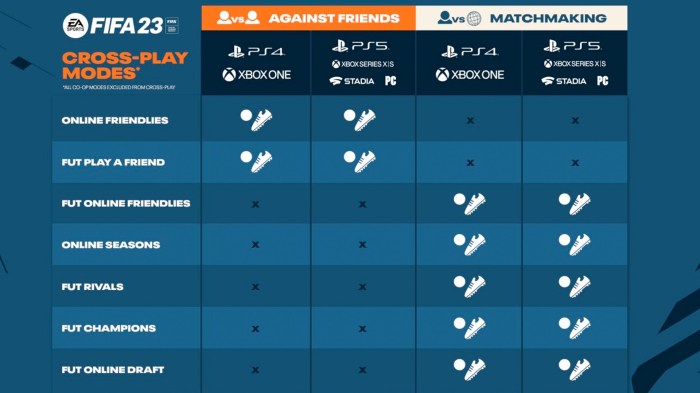
Cross-platform play, in the realm of online gaming, refers to the ability for players using different gaming platforms (like PlayStation, Xbox, PC, Nintendo Switch, and mobile devices) to seamlessly interact and play together within the same game world. This breaks down the traditional barriers of platform exclusivity, fostering a larger, more diverse player base and enhancing the overall gaming experience.
It’s a significant step towards a more unified and connected gaming community.Cross-platform play offers several advantages, from increased player counts leading to shorter queue times and more frequent matches, to a broader spectrum of playstyles and skill levels enriching the overall competition. However, achieving this seamless integration requires overcoming significant technical hurdles, as detailed later.
Examples of Games with Successful Cross-Platform Play
Several successful games demonstrate the benefits of cross-platform play. These titles show how effectively bridging different platforms can expand a game’s reach and longevity. Fortnite, for example, is a prime example of a game that has embraced cross-platform play wholeheartedly, allowing players on PC, consoles, and mobile devices to compete together. Rocket League, another massively popular title, also successfully implemented cross-platform play, leading to a vibrant and diverse online community.
Minecraft, with its vast player base spanning multiple platforms, is another testament to the success of cross-platform functionality. These games highlight how effective cross-platform play can be in building a thriving online community.
Examples of Games Without Cross-Platform Play and Reasons for Exclusion
Not all games support cross-platform play, often due to a variety of technical and business reasons. Some games, particularly those with complex control schemes or highly competitive aspects, might find cross-platform play challenging to implement fairly. For instance, a PC player with a mouse and keyboard might have a significant advantage over a console player using a controller in a fast-paced shooter.
Maintaining game balance across platforms with differing input methods can be a significant hurdle. Furthermore, licensing agreements and platform-specific features can also present obstacles. A game might lack cross-platform play because the developers haven’t secured the necessary agreements with all relevant platform holders, or because certain features are exclusive to a specific platform, making integration complex.
Technical Challenges in Developing Cross-Platform Play Functionality
Implementing cross-platform play presents a number of significant technical challenges. Different platforms have varying hardware specifications, operating systems, and networking protocols. This means developers must carefully consider how to ensure consistent performance and gameplay across all supported platforms. One major hurdle is input standardization. Mapping different control schemes (mouse and keyboard vs.
gamepad) to ensure fair and balanced gameplay requires meticulous design and testing. Another key challenge lies in network compatibility. Different platforms use different networking architectures, requiring developers to build robust and adaptable networking infrastructure that can handle the diverse range of connections. Finally, security and anti-cheat measures must also be carefully considered and adapted to prevent cheating and ensure a fair playing environment across all platforms.
The sheer complexity of these issues often necessitates significant development time and resources.
Benefits of Cross-Platform Play for Gamers
Cross-platform play has revolutionized the gaming landscape, offering players a wealth of advantages previously unimaginable. By breaking down the barriers between different gaming platforms, it has unlocked a new era of enhanced social interaction, broader competition, and a more streamlined gaming experience. This section will explore the key benefits cross-platform play offers to gamers.Increased Player Base and Matchmaking SpeedCross-platform play significantly expands the pool of potential players.
Imagine a game with a dedicated player base of 100,000 on PlayStation and another 150,000 on Xbox. With cross-platform enabled, the matchmaking system now has access to a combined player base of 250,000, drastically reducing wait times for matches and ensuring a more consistently populated online experience. This is particularly beneficial for less popular games that might struggle to maintain a robust player base on a single platform.
Finding a match quickly is crucial for maintaining the momentum and enjoyment of a gaming session, and cross-platform play directly addresses this need.Enhanced Overall Gaming ExperienceThe expanded player base isn’t just about faster matchmaking; it also contributes to a richer, more diverse gaming experience. Players are exposed to different play styles and strategies from individuals across various platforms, leading to a more dynamic and engaging gameplay environment.
This broadened perspective can significantly improve a player’s own skills and understanding of the game. Furthermore, the ability to play with friends regardless of their chosen platform adds a significant layer of convenience and accessibility, strengthening social connections within gaming communities.Social Aspects of Cross-Platform Play vs. Platform-Exclusive GamingThe social impact of cross-platform play is profound. It fosters a more inclusive and interconnected gaming community.
Friends who previously couldn’t play together due to platform limitations can now seamlessly join forces, fostering stronger bonds and shared experiences. This contrasts sharply with platform-exclusive gaming, where social interactions are often limited to the same platform’s user base. The increased interaction with a wider range of players can lead to new friendships and rivalries, enriching the overall social fabric of the gaming community.Comparison of Cross-Platform Play: Pros and Cons
| Feature | Pros | Cons |
|---|---|---|
| Player Base | Larger player pool, faster matchmaking, more consistent online population | Potential for imbalance in skill levels due to differing platform controls or player experience |
| Social Interaction | Increased opportunities for interaction with friends regardless of platform, broader community engagement | Potential for communication difficulties due to platform-specific features or communication systems |
| Gameplay | More diverse play styles and strategies, enhanced competition | Possible technical issues due to compatibility challenges between platforms |
| Convenience | Increased accessibility and ease of playing with friends | Requires developers to implement cross-platform functionality, potentially increasing development costs |
Challenges and Limitations of Cross-Platform Play
Implementing cross-platform play, while offering exciting possibilities, isn’t without its hurdles. Technical inconsistencies between platforms, varying player experiences, and economic considerations all contribute to a complex challenge for game developers. Successfully navigating these obstacles is crucial for creating a truly inclusive and enjoyable multiplayer experience.
Technical Difficulties in Balancing Gameplay
Achieving consistent gameplay across different platforms requires meticulous attention to detail. Variations in processing power, memory, and graphics capabilities between consoles, PCs, and mobile devices can lead to significant performance disparities. A game that runs smoothly on a high-end PC might struggle to maintain a consistent frame rate on a less powerful mobile device, resulting in unfair advantages or disadvantages for players depending on their hardware.
For example, a player with a high refresh rate monitor and powerful PC might have a noticeable advantage in a fast-paced shooter compared to a player using a standard console. Developers must carefully optimize their games to minimize these discrepancies, often involving compromises in visual fidelity or features to ensure cross-platform compatibility. This often involves extensive testing and potentially the need for different graphical settings or gameplay adjustments for each platform.
Challenges Related to Input Methods and Controller Variations
The variety of input methods across platforms presents another significant challenge. PC players typically use keyboard and mouse, offering precise aiming and control, while console players rely on controllers, which can vary widely in design and responsiveness. Mobile players utilize touchscreens, which offer a different level of precision altogether. Directly comparing these different input methods can create an uneven playing field.
For instance, a PC player’s precise aiming with a mouse might be significantly superior to a mobile player using a touchscreen in a first-person shooter. Developers often need to implement sophisticated aim assist or other compensatory mechanics to mitigate these differences, but finding a balance that feels fair to all players is a difficult task. The challenge is amplified by the diverse range of controllers available, each with its own quirks and sensitivities.
Issues with In-Game Economies and Microtransactions
Cross-platform play can complicate in-game economies and microtransactions. Maintaining a fair and balanced marketplace across multiple platforms requires careful consideration of player spending habits and purchasing power. For instance, a player on a mobile device might be less inclined to make significant in-app purchases compared to a PC player. This can lead to imbalances in the game’s economy, affecting gameplay and the overall player experience.
Furthermore, different platforms might have different regulatory requirements and policies regarding microtransactions, further complicating the process. Ensuring consistent pricing and preventing exploitation across platforms requires meticulous planning and execution. A lack of careful consideration in this area can lead to accusations of unfair advantages for certain players or even widespread dissatisfaction.
Common Player Complaints and Frustrations
Players often express several common frustrations related to cross-platform play. These frequently include issues with matchmaking, where players might be paired against opponents with significantly different skill levels or hardware capabilities. Lag and connectivity problems can also be more prevalent due to the increased number of players and platforms involved. Furthermore, the differences in input methods and controls, as previously discussed, can lead to feelings of unfairness and frustration.
Finally, cross-platform play can sometimes lead to increased toxicity and cheating due to the broader player base. For example, players might encounter toxic behavior from players on other platforms who are not subject to the same community guidelines or reporting systems.
Impact on the Online Gaming Industry
Cross-platform play has profoundly reshaped the online gaming industry, impacting everything from game development and marketing to the competitive landscape and business models. Its influence is far-reaching, prompting significant adaptations and creating new opportunities for both developers and players.The integration of cross-platform play necessitates changes in game design and marketing strategies. Developers must now consider a wider range of hardware and software capabilities, leading to compromises in certain features or adjustments to ensure compatibility across platforms.
Marketing campaigns must also adapt to reach a broader player base, potentially requiring platform-specific messaging and promotional strategies.
Game Development and Marketing Strategies
The introduction of cross-platform play significantly alters the development process. Developers need to account for varying input methods (controllers, keyboards, touchscreens), different screen resolutions and aspect ratios, and diverse network conditions. This often leads to a more complex development cycle, requiring additional testing and optimization across multiple platforms. Marketing strategies also change. Instead of focusing solely on a single platform’s audience, developers now need to reach a broader, more fragmented player base, necessitating diverse marketing approaches that resonate with each target audience.
For example, a game might employ different social media strategies for PC players versus mobile players.
Competitive Landscape of Online Games
Cross-platform play has a complex effect on the competitive landscape. While it can expand the player pool, leading to larger, more active communities, it can also introduce imbalances. Players using high-end PCs might have a competitive advantage over those on consoles or mobile devices, potentially leading to frustration and a less equitable playing field. Balancing gameplay across different platforms becomes a crucial challenge for developers, requiring careful consideration of hardware capabilities and input methods.
This has led to some developers implementing cross-platform matchmaking systems that group players based on skill level rather than solely on platform. The battle royale genre, for example, has seen significant changes due to cross-platform play, with some titles implementing skill-based matchmaking to mitigate the disparity in player capabilities.
Business Models of Games with and without Cross-Platform Play
Games with cross-platform play often benefit from a larger player base, potentially leading to increased revenue through sales, in-app purchases, and subscriptions. The expanded audience can also increase the visibility and longevity of the game. However, the increased development costs associated with ensuring cross-platform compatibility must be considered. Games without cross-platform play might have lower development costs but may struggle to attract and retain a large player base, potentially limiting their overall revenue potential.
The success of a game with or without cross-platform play ultimately depends on a multitude of factors, including the game’s quality, marketing effectiveness, and the overall market demand. For example, a niche game might thrive without cross-platform play, while a large-scale multiplayer game is likely to benefit greatly from its inclusion.
Hypothetical Scenario: Widespread Cross-Platform Adoption
Imagine a future where nearly all online games seamlessly support cross-platform play. The competitive landscape would be drastically altered, with highly skilled players emerging from unexpected platforms. The line between “console gamers” and “PC gamers” would blur, leading to a more unified and diverse gaming community. Game developers would need to focus heavily on balancing gameplay across all platforms, potentially leading to innovative design solutions.
Marketing would shift towards emphasizing the shared experience and the vastness of the player base, fostering a sense of global community. However, challenges related to cheating and maintaining a fair competitive environment would become even more critical, demanding robust anti-cheat measures and potentially even more sophisticated matchmaking systems. This scenario represents a significant shift in the industry, demanding adaptability and innovation from both developers and players.
The Future of Cross-Platform Play
The convergence of gaming platforms is accelerating, driven by player demand and technological advancements. Cross-platform play, once a niche feature, is rapidly becoming the standard, pushing developers and platform holders to innovate and overcome existing limitations. The future of cross-platform play promises even greater inclusivity, richer experiences, and a more unified gaming ecosystem.
Advanced Cross-Platform Technologies
Future advancements will likely focus on refining existing technologies and developing new ones to seamlessly integrate diverse platforms. This includes improvements in matchmaking algorithms to ensure fair and balanced gameplay across different controller schemes and input methods. We can anticipate the rise of more sophisticated anti-cheat mechanisms specifically designed to combat cross-platform cheating, a critical issue as player bases expand.
For example, we might see the development of advanced behavioral analysis systems that can identify and flag suspicious activity across multiple platforms, rather than relying solely on individual platform-specific anti-cheat solutions. This could involve analyzing player inputs, movement patterns, and even in-game interactions to detect anomalies indicative of cheating.
Addressing Current Limitations Through Technological Solutions
Current limitations, such as differing input methods and performance disparities between platforms, are significant hurdles. However, several potential solutions are emerging. Adaptive matchmaking systems will become increasingly refined, considering not only skill level but also the player’s chosen input device and platform capabilities. This means a player using a mobile device will be matched against others using similar devices, rather than being pitted against high-end PC players.
Furthermore, advancements in cloud gaming technology, discussed in the next section, will help mitigate performance discrepancies by providing a consistent gaming experience regardless of the player’s local hardware. Imagine a future where the quality of your connection, rather than the raw power of your console or PC, determines your in-game performance.
The Role of Cloud Gaming in Cross-Platform Play
Cloud gaming is poised to revolutionize cross-platform play. By removing the reliance on individual device hardware, cloud gaming services can create a more level playing field. All players, regardless of their platform or device, will experience the same game performance, determined by the cloud server’s capabilities. This dramatically simplifies cross-platform development and eliminates many of the technical challenges associated with optimizing games for multiple platforms.
For example, a game developed for cloud streaming can run identically on a low-end smartphone, a high-end PC, or a console, eliminating the need for extensive platform-specific optimization. This will lead to wider accessibility and a more unified gaming community.
Innovative Solutions for Enhanced Cross-Platform Experiences
The future of cross-platform play will also see innovative solutions focused on improving the player experience. Imagine a system that dynamically adjusts the user interface based on the player’s input method, ensuring optimal control regardless of whether they are using a controller, keyboard and mouse, or a touchscreen. Furthermore, the integration of cross-platform social features, such as unified friends lists and cross-platform voice chat, will foster a stronger sense of community and make it easier for players to connect and play together, regardless of their preferred platform.
Consider a future where you can seamlessly invite friends from different platforms to a party, regardless of the game you’re playing, with voice chat and party management handled effortlessly across all platforms.
Online Games
From humble beginnings with text-based MUDs (Multi-User Dungeons) to the immersive worlds of today’s AAA titles, online gaming has undergone a dramatic evolution. This transformation isn’t just about improved graphics and technology; it’s fundamentally reshaped how we socialize, compete, and collaborate. The rise of massively multiplayer online role-playing games (MMORPGs) like World of Warcraft and online battle arenas (MOBAs) like League of Legends, for example, created virtual communities with millions of players, fostering friendships and rivalries across geographical boundaries.Online gaming has profoundly impacted social interaction, offering opportunities for both casual and intense social engagement.
Players forge lasting bonds through shared experiences, teamwork, and competition, often transcending the limitations of physical proximity. However, the digital realm also presents challenges, such as online toxicity and the potential for social isolation if not managed responsibly. The balance between the benefits and drawbacks of online social interaction remains a key area of ongoing discussion and research within the gaming community.
Online Game Genre Comparisons and Cross-Platform Play
Different online game genres approach cross-platform play in unique ways. First-person shooters (FPS) like Call of Duty and Halo often face significant challenges due to the precise aiming and fast-paced nature of gameplay. Maintaining a level playing field across different input methods (mouse and keyboard versus controller) requires careful balancing and adjustments. Conversely, games emphasizing strategy or role-playing, such as Fortnite or Minecraft, often find cross-platform play relatively easier to implement, as precise aiming is less critical to gameplay success.
MMORPGs present a different challenge, needing to consider server infrastructure and potential imbalances between platforms in terms of player base size and accessibility. The success of cross-platform play often depends on the genre’s specific mechanics and the willingness of developers to adapt their game design to accommodate different platforms.
Online Gaming Business Models
The online gaming industry utilizes a diverse range of business models to generate revenue. The most common include:
- Free-to-play (F2P): Games are free to access, with revenue generated through in-app purchases (IAPs) such as cosmetic items, power-ups, or expansions. Examples include Fortnite and many mobile games.
- Subscription-based: Players pay a recurring fee for access to the game’s content. Examples include World of Warcraft and many MMORPGs.
- Premium/Buy-to-play: Players purchase the game upfront for a one-time fee, with optional DLC (downloadable content) or expansions available for additional purchase. Examples include many console and PC games.
- Hybrid Models: Many games combine elements of the above models, offering a base game for free or at a premium price with additional monetization through IAPs or subscriptions. This model allows for wider accessibility while also generating revenue from engaged players.
The choice of business model significantly impacts the game’s design, player experience, and overall sustainability.
Key Features of a Successful Online Game
Creating a successful online game requires a delicate balance of various factors. Key features often include:
- Engaging Gameplay: A core mechanic that keeps players hooked and returning for more.
- Regular Updates and Content: Consistent additions of new content to maintain player interest and prevent stagnation.
- Strong Community: A thriving player base fosters interaction and loyalty.
- Fair and Balanced Gameplay: A system that ensures a level playing field and prevents imbalances.
- Robust Anti-Cheat Measures: Protecting the integrity of the game from cheaters and exploiters.
- Cross-Platform Compatibility (where applicable): Allowing players across different platforms to interact seamlessly.
- Responsive Development Team: Addressing player feedback and concerns promptly and effectively.
These elements, when combined effectively, contribute to a positive and sustainable online gaming experience.
Illustrative Example: A Cross-Platform Game
Imagine “Starfall Renegades,” a vibrant, action-packed space exploration MMO boasting cross-platform play across PC, PlayStation 5, Xbox Series X|S, and Nintendo Switch. This game seamlessly blends cooperative gameplay with competitive elements, offering a rich and dynamic experience for players regardless of their chosen platform.The core gameplay revolves around piloting customizable starships, engaging in thrilling space battles, exploring procedurally generated star systems, and completing dynamic missions.
Players can choose from a diverse roster of characters, each with unique abilities and specializations, allowing for varied playstyles and team compositions. The game features both PvE (Player versus Environment) and PvP (Player versus Player) modes, fostering a healthy mix of collaborative and competitive gameplay.
Game Mechanics and Features
Starfall Renegades utilizes a fluid and intuitive control scheme that adapts seamlessly to each platform. PC players enjoy precise mouse and keyboard controls, while console players benefit from intuitive controller layouts optimized for each platform’s specific design. Regardless of the platform, the core mechanics remain consistent, ensuring a fair and balanced experience. This consistency extends to the crafting system, where players can gather resources, upgrade their ships, and customize their weaponry using the same core mechanics across all platforms.
Players can also participate in large-scale cooperative raids against powerful bosses, requiring strategic teamwork and coordination across platforms.
User Interface Adaptation
The user interface (UI) is designed with a modular approach, adapting dynamically to different screen sizes and input methods. The PC version features a full-screen UI with detailed information displays and customizable hotkeys. Console versions offer a streamlined UI optimized for controller navigation, featuring larger icons and simplified menus. The Nintendo Switch version further optimizes the UI for handheld mode, ensuring clear visibility and intuitive touch controls when needed.
Regardless of the platform, the core UI elements, such as the map, inventory, and character stats, are consistently positioned and visually consistent, minimizing the learning curve for players switching between platforms.
Community Features and Cross-Platform Interaction
A robust social system is central to Starfall Renegades’ cross-platform experience. Players can easily add friends regardless of their platform, join guilds together, and participate in cross-platform chat channels. The in-game matchmaking system prioritizes connecting players based on skill level rather than platform, ensuring balanced and fair matches. A dedicated cross-platform leaderboard tracks player achievements and rankings across all platforms, fostering healthy competition and encouraging collaboration.
In-game events and challenges are also designed to encourage interaction across platforms, rewarding players who participate in cross-platform teams.
Gameplay Balancing Across Platforms
Balancing gameplay across different platforms is achieved through meticulous testing and adjustments. The development team regularly monitors player statistics and feedback to identify and address any imbalances that may arise. For instance, slight adjustments to sensitivity settings might be made for console controllers to ensure comparable aiming accuracy to PC mouse controls. Input lag is carefully minimized across all platforms to provide a consistently responsive and enjoyable gaming experience.
Regular updates and patches are released to fine-tune the balance and address any emerging issues, ensuring a fair and enjoyable experience for all players.
Last Recap
Cross-platform play isn’t just a convenient feature; it’s a paradigm shift that’s reshaping the online gaming experience. While challenges remain, the benefits – expanded player bases, enhanced social interaction, and a more inclusive gaming community – are undeniable. As technology advances and developers find innovative solutions, the future of cross-platform play looks brighter than ever. Get ready for even more seamless, unified, and exciting gaming adventures!
Common Queries
What are the biggest security concerns with cross-platform play?
Maintaining consistent security across different platforms with varying security protocols is a major challenge. Developers need to implement robust anti-cheat measures to prevent exploits and maintain a fair playing field.
How does cross-platform play affect game balancing?
Balancing gameplay across different input methods (controllers vs. keyboard/mouse) and hardware capabilities can be tricky. Developers often need to implement adjustments to ensure fairness and prevent one platform from having an unfair advantage.
Will all games eventually support cross-platform play?
While the trend is towards increased cross-platform support, it’s unlikely
-all* games will adopt it. Factors like licensing agreements, development costs, and game design choices can influence a developer’s decision.
Can I use my existing progress in a cross-platform game if I switch platforms?
It depends on the game. Some games allow seamless progress transfer between platforms, while others may require separate accounts or may not support cross-progression at all.