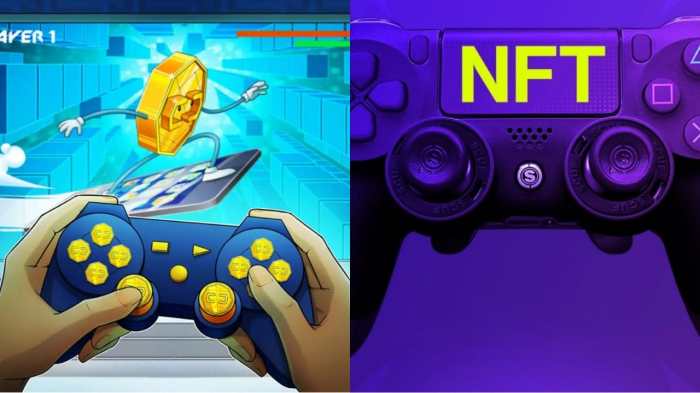
Ready to dive headfirst into the electrifying world of NFT gaming? Forget dusty old pixels – we’re talking about digital assets that truly belong to
-you*, shaping the future of interactive entertainment. From the humble beginnings of blockchain integration to the explosive rise of Play-to-Earn (P2E) and the immersive promise of the metaverse, NFT gaming is rewriting the rules of the game.
Get ready for a whirlwind tour of this rapidly evolving landscape!
This journey will explore the key milestones, from the initial technological hurdles and the emergence of groundbreaking P2E models to the innovative game mechanics and community-driven governance that define the modern NFT gaming experience. We’ll uncover the potential of the metaverse, examine the challenges of regulation, and peer into the crystal ball to predict future trends. So buckle up, gamers – it’s going to be a wild ride!
Early Stages of NFT Gaming
The nascent days of NFT gaming were a fascinating blend of excitement and uncertainty. Early adopters were captivated by the promise of true ownership and in-game asset scarcity, but the technology was far from polished, and the gaming experience often suffered as a result. This period saw the first tentative steps towards integrating blockchain technology into the world of interactive entertainment, laying the groundwork for the more sophisticated projects we see today.Early implementations of NFTs in online games primarily focused on creating verifiable scarcity for in-game items.
Instead of relying on centralized servers to track ownership, NFTs allowed for the creation of unique, digitally scarce assets that could be bought, sold, and traded on external marketplaces. This introduced a new layer of economic activity within the gaming ecosystem, but it also presented considerable challenges.
Early NFT Game Projects and Their Impact
The earliest NFT games often struggled with scalability and user experience. Many were built on Ethereum, a blockchain known for its high transaction fees and slow transaction speeds, leading to frustrating gameplay for users. Despite these limitations, several projects made significant strides in demonstrating the potential of NFTs in gaming. For example, CryptoKitties, launched in 2017, was a groundbreaking project that showcased the concept of collectible digital assets.
While simple in its gameplay, it demonstrated the potential for creating a market for digital collectibles and highlighted the potential for significant player engagement. Another early example is Decentraland, a virtual world built on the Ethereum blockchain that allowed users to buy and sell virtual land and other assets. While it faced technical limitations and usability challenges, Decentraland demonstrated the potential for creating persistent, player-owned virtual worlds.
These early projects, while imperfect, paved the way for future innovations in the space.
Technological Challenges in Early NFT Game Adoption
The integration of NFTs into gaming faced significant technological hurdles. High gas fees on blockchains like Ethereum made transactions expensive and time-consuming, creating a barrier to entry for many players. The slow transaction speeds also led to frustrating gameplay experiences, as users had to wait extended periods for transactions to be confirmed. Furthermore, the lack of interoperability between different blockchain networks limited the ability of players to seamlessly transfer assets between different games.
Many early projects also suffered from poor user interfaces and a lack of intuitive onboarding experiences, further hindering widespread adoption. The technical complexity of blockchain technology also posed a significant challenge for game developers, who often lacked the expertise to effectively integrate NFTs into their games. These factors contributed to a relatively slow initial adoption rate for NFT gaming, but they also spurred innovation and improvements in the underlying technology.
Rise of Play-to-Earn (P2E) Games
The emergence of Play-to-Earn (P2E) games marked a significant turning point in the gaming industry, blurring the lines between leisure and economic activity. These games leverage blockchain technology and NFTs to allow players to earn cryptocurrency or other in-game assets while playing, creating a new paradigm where gaming is not just a pastime but a potential source of income.
This shift has had profound economic and social consequences, transforming how we view gaming and its potential.P2E game mechanics rely heavily on NFTs. Players typically purchase or earn NFTs representing in-game assets like characters, weapons, land, or virtual items. These NFTs are unique and verifiable on a blockchain, providing proof of ownership and enabling players to trade them on marketplaces.
The act of playing the game often involves utilizing these NFTs, and success in gameplay frequently results in rewards in the form of cryptocurrency tokens specific to the game or other valuable in-game assets. These rewards can then be converted into fiat currency, creating a tangible economic incentive for participation.
P2E Game Models: A Comparison
Different P2E games utilize varying models to incentivize players and distribute rewards. Some games rely on a straightforward reward system where players earn tokens for completing tasks or winning matches. Others incorporate more complex mechanics like staking, breeding, or land ownership, where players can earn passive income from their in-game assets. Some games focus on competitive gameplay, rewarding the most skilled players, while others prioritize community building and collaborative efforts.
The choice of model significantly impacts the player experience and the overall economic sustainability of the game.
Economic and Social Impact of P2E Games
The rise of P2E games has had a significant economic impact, particularly in developing countries where players have found a new avenue for income generation. However, concerns remain about the sustainability of these economic models, with some games facing challenges in maintaining player engagement and token value. Socially, P2E games have created new communities built around shared gameplay and economic interests.
They have also raised questions about the ethical implications of gamified work and the potential for exploitation. The long-term economic and social effects of this new gaming paradigm are still unfolding and require careful monitoring and analysis.
Examples of Popular P2E Games
The following table provides a comparison of four popular P2E games, showcasing their diverse approaches to gameplay and earning mechanisms. Note that earning potential can be highly variable and depends on factors such as player skill, time investment, and market conditions.
| Game | Token | Gameplay | Earning Potential |
|---|---|---|---|
| Axie Infinity | AXS, SLP | Breed, battle, and collect Axies (NFT creatures). | Highly variable; ranged from significant income to minimal returns depending on market conditions and player skill. |
| The Sandbox | SAND | Create, build, and play in a voxel-based metaverse. | Varies based on land ownership, game development, and asset creation and sales. |
| Splinterlands | SPS | Collectible card game with strategic battles. | Depends on card ownership, battle performance, and trading. |
| Alien Worlds | TLM | Play-to-earn metaverse game focused on resource mining and land ownership. | Income generation varies significantly based on land ownership, mining efforts, and TLM market fluctuations. |
Evolution of Game Mechanics and NFT Utility
The initial integration of NFTs into gaming largely focused on digital asset ownership. Players could buy, sell, and trade unique in-game items represented by NFTs, proving their ownership on the blockchain. However, the evolution of NFT utility within games has moved far beyond this simple ownership model, leading to more dynamic and engaging gameplay experiences. This evolution has unlocked exciting possibilities for player interaction, game economies, and overall game design.The integration of NFTs has significantly broadened the scope of gameplay mechanics.
No longer are NFTs merely static assets; they’re becoming active participants in the game world, influencing gameplay in novel and exciting ways. This has led to the emergence of new game mechanics and genres, enriching the overall player experience.
NFT Utility Beyond Simple Ownership
Early NFT games often treated NFTs as simple cosmetic upgrades or collectibles. While this provided a sense of ownership, it didn’t significantly impact gameplay. The evolution has seen NFTs take on far more active roles. For example, NFTs can now represent characters with unique abilities, land plots with resource generation capabilities, or even in-game items that evolve and change based on player actions and in-game events.
This dynamic interaction between NFTs and gameplay has created a new layer of depth and strategy, moving beyond simple collection and trading. Games are now designed around the unique properties and potential of NFTs, rather than simply integrating them as an afterthought.
Innovative Uses of NFTs Enhancing Gameplay and Player Experience
One innovative use of NFTs is in creating decentralized autonomous organizations (DAOs) within games. Players holding specific NFTs could gain voting rights on game development decisions, influencing the direction of the game’s future. This fosters a stronger sense of community and ownership among players. Another example is the use of NFTs to create truly unique and scarce in-game items.
Unlike traditional games where developers can easily inflate the supply of powerful items, the scarcity of NFTs ensures their value and desirability remain high, leading to more engaging and competitive gameplay. Imagine a game where owning a specific NFT grants access to exclusive quests, events, or areas within the game world. This provides a compelling incentive for players to acquire and utilize specific NFTs, further enriching the gameplay experience.
A Hypothetical NFT Game Mechanic: Dynamic Resource NFTs
Imagine a game where resource gathering is central to gameplay. Instead of static resource nodes, the game utilizes NFTs representing dynamic resource deposits. These NFTs could represent different types of resources (e.g., ore, wood, water) and each would have varying levels of richness and depletion rates. Players can “mine” these NFTs, gradually depleting their resources. However, the NFT itself evolves over time, possibly even changing resource types or increasing its richness based on player interactions or real-world events.
For example, a “water” NFT might increase its yield after a simulated rainfall event in the game, mirroring real-world conditions. This creates a dynamic and unpredictable resource economy, requiring players to adapt their strategies and constantly evaluate the value and potential of their NFT resource deposits. Furthermore, players could even trade these NFTs on the open market, creating a secondary economy based on the fluctuating value of these dynamic resources.
This would not only create an engaging gameplay loop but also introduce a fascinating layer of economic strategy.
The Metaverse and NFT Gaming Integration
The metaverse, a persistent, shared, 3D virtual world, is poised to revolutionize NFT gaming. By offering immersive and interactive experiences beyond the limitations of traditional gaming platforms, the metaverse creates exciting new opportunities for developers and players alike. The seamless integration of NFTs within these virtual worlds adds a layer of ownership and unique value, enhancing the overall gaming experience and fostering a vibrant digital economy.The convergence of these two technologies is not merely a trend; it represents a fundamental shift in how we interact with digital games and virtual spaces.
This integration unlocks opportunities for enhanced gameplay, increased player engagement, and the creation of entirely new game genres.
Successful Metaverse NFT Game Integrations
Several projects have already demonstrated the potential of metaverse-NFT game integration. For example, Decentraland, a decentralized metaverse platform, hosts numerous NFT-based games and experiences. Players can own virtual land, build structures, and participate in various activities, all using NFTs to represent ownership and in-game assets. Similarly, The Sandbox, another popular metaverse platform, allows users to create and monetize their own gaming experiences using NFTs, fostering a thriving creator economy.
These examples highlight the potential for the metaverse to become a central hub for NFT gaming, providing a platform for both established studios and independent developers.
Challenges and Opportunities Presented by the Metaverse for NFT Games
The integration of NFTs into the metaverse presents both significant challenges and remarkable opportunities. Careful consideration of these factors is crucial for the sustainable growth of this burgeoning sector.
- Scalability and Performance: The metaverse requires robust infrastructure to handle a large number of concurrent users and complex interactions. Ensuring smooth performance and scalability while supporting NFT transactions is a major challenge. Solutions such as improved network protocols and optimized game engines are necessary to address this.
- Interoperability: Different metaverse platforms often operate in silos, limiting the portability of NFTs and player assets between them. Achieving interoperability, allowing seamless transfer of assets across various platforms, is vital for a truly unified NFT gaming ecosystem. Standardized protocols and open-source development could facilitate this.
- Security and Fraud: The decentralized nature of the metaverse and the use of NFTs introduce unique security risks. Protecting against scams, theft, and unauthorized access is crucial. Strong security measures, including robust smart contracts and secure wallets, are essential to mitigate these risks. The rise of sophisticated fraud detection mechanisms is also necessary.
- Regulatory Uncertainty: The legal and regulatory landscape surrounding NFTs and the metaverse is still evolving. Clarity on taxation, intellectual property rights, and data privacy is crucial for fostering a sustainable and responsible industry. Collaboration between developers, regulators, and legal experts is needed to establish a clear framework.
- Accessibility and Inclusivity: Ensuring that metaverse NFT games are accessible to a broad audience, regardless of their technical expertise or socioeconomic background, is crucial for their widespread adoption. This requires user-friendly interfaces, affordable entry points, and educational resources to empower diverse players.
- New Revenue Models: The metaverse unlocks novel opportunities for monetization beyond traditional gaming models. Subscription services, virtual land sales, in-world advertising, and the creation of unique digital assets all offer promising avenues for revenue generation. Experimentation and innovation are needed to explore these possibilities fully.
Community and Governance in NFT Games
The success of NFT games hinges not just on compelling gameplay and innovative mechanics, but also on the strength and engagement of their community. A vibrant, active community fosters growth, provides valuable feedback, and contributes directly to the game’s long-term health and sustainability. Effective governance mechanisms, often powered by Decentralized Autonomous Organizations (DAOs), ensure transparency, fairness, and community ownership in the game’s development and direction.A strong community provides crucial feedback during development, identifying bugs, suggesting improvements, and shaping the game’s direction to better align with player expectations.
This collaborative approach leads to a more refined and engaging product, increasing player retention and attracting new players. Furthermore, community involvement in governance ensures that the game’s evolution reflects the collective desires of its players, promoting a sense of ownership and shared responsibility. This fosters loyalty and contributes to the game’s overall longevity.
Community-Driven Development Examples
Several successful NFT game projects demonstrate the power of community involvement. For instance, games utilizing DAO structures have seen increased player engagement and successful community-led initiatives. The active participation of players in decision-making processes regarding game updates, new features, and even in-game asset design demonstrates a tangible impact on the game’s success. These examples highlight the importance of creating a collaborative environment where players feel heard and valued, leading to a more sustainable and engaging gaming experience.
Decentralized Autonomous Organizations (DAOs) in NFT Game Governance
DAOs offer a powerful framework for decentralized governance in NFT games. They allow players to directly participate in decision-making processes through token voting. This can involve voting on game updates, allocating treasury funds for development, or even proposing and implementing new game mechanics. For example, a DAO might use token holders’ votes to decide on the allocation of resources for developing new in-game content, or to determine the parameters for future in-game events.
This transparent and democratic approach empowers players, fostering a sense of ownership and encouraging long-term engagement. The use of smart contracts ensures that governance decisions are executed automatically and transparently, enhancing trust and accountability. The specific implementation of DAOs can vary, with some games employing more complex structures involving multiple governance tokens or tiered voting rights. However, the core principle remains the same: to empower players with a voice in the future of their game.
Impact of Blockchain Technology on Online Games
Blockchain technology has revolutionized online gaming, introducing unprecedented levels of transparency, security, and player ownership. Its decentralized nature fundamentally alters the relationship between players, developers, and in-game assets, creating new opportunities and challenges for the industry. This section will explore how blockchain empowers new features and compares traditional and blockchain-based game economies.Blockchain technology enables several key features previously impossible in traditional online games.
The immutable ledger ensures verifiable ownership of in-game assets, preventing fraud and duplication. Smart contracts automate processes like trading and distribution, eliminating intermediaries and increasing efficiency. Furthermore, the decentralized nature of blockchain fosters a more equitable and transparent game economy, empowering players with greater control over their digital assets.
Blockchain-Enabled Features in Online Games
The integration of blockchain introduces functionalities that significantly enhance the player experience and game economy. These enhancements include verifiable ownership of in-game assets, secure and transparent transactions, and the ability to create truly player-owned economies. The implementation of smart contracts automates various game processes, reducing reliance on centralized servers and potentially mitigating risks associated with single points of failure.
Comparison of Traditional and Blockchain-Based Game Economies
Traditional online game economies often rely on centralized servers controlled by game developers. This creates a system where developers hold significant power over in-game assets and their distribution. Players generally have limited ownership rights and are subject to the developers’ policies regarding trading and in-game currency. In contrast, blockchain-based game economies utilize decentralized ledgers, granting players verifiable ownership of their in-game assets.
This fosters a more player-centric environment, empowering players to trade and exchange assets freely and securely. The transparency provided by blockchain also increases trust and accountability within the game economy. For example, the value of in-game items is directly tied to their scarcity and demand, unlike traditional games where developers can artificially inflate or deflate values.
Visual Representation of Blockchain-Based In-Game Asset Flow
Imagine a diagram showing a circular flow. At the top, a player (Player A) owns a unique digital sword (NFT). An arrow points downwards, illustrating Player A listing the sword on a decentralized marketplace (e.g., OpenSea). Another arrow then shows another player (Player B) purchasing the sword. The transaction is recorded on the blockchain, represented by a block with the details of the transaction (buyer, seller, asset, timestamp, and price).
The ownership of the sword is transferred to Player B, represented by an arrow pointing to Player B. The entire process is transparent and verifiable on the blockchain, ensuring the legitimacy of the transaction. This contrasts with traditional games where such transactions would rely on the game’s server and its associated trust mechanisms. The immutability of the blockchain prevents fraudulent alterations or reversals of the transaction.
Challenges and Future Trends in NFT Gaming
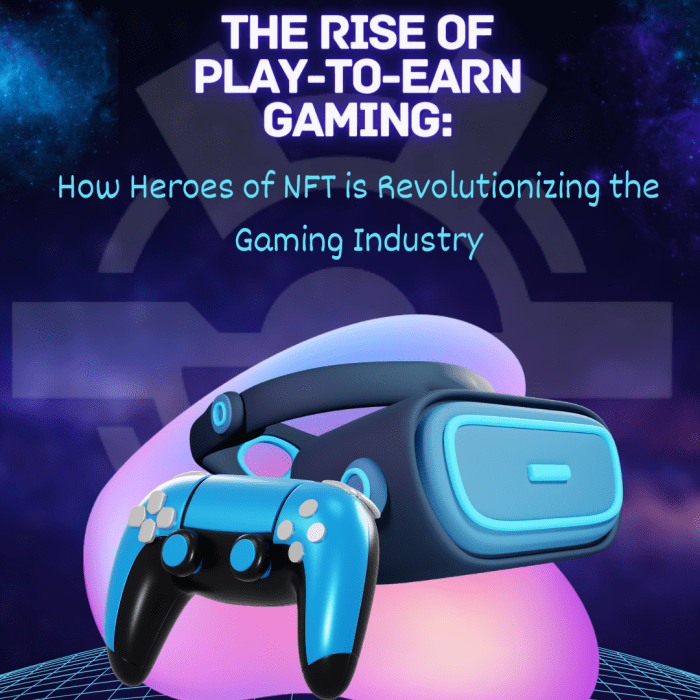
The NFT gaming landscape, while brimming with potential, is not without its hurdles. From scalability issues to regulatory uncertainty, several factors could significantly impact its growth and mainstream adoption. Understanding these challenges and anticipating future trends is crucial for developers, investors, and players alike to navigate this rapidly evolving space.
Scalability and Transaction Costs
The blockchain networks underpinning many NFT games often struggle with scalability. High transaction fees and slow processing times can create a frustrating user experience, particularly for casual players. For example, the Ethereum network, a popular choice for NFT transactions, has historically experienced high gas fees, making simple in-game actions prohibitively expensive for some. This directly impacts accessibility and limits the potential player base.
Solutions being explored include the adoption of layer-2 scaling solutions and the use of alternative, more efficient blockchains designed specifically for gaming.
Regulatory Uncertainty and Legal Frameworks
The legal landscape surrounding NFTs and blockchain technology is still largely uncharted territory. Governments worldwide are grappling with how to regulate these emerging technologies, leading to uncertainty for developers and investors. This uncertainty can hinder investment, stifle innovation, and create legal risks for projects operating in a grey area. Clearer regulatory frameworks are needed to provide a stable and predictable environment for the industry to thrive.
Examples include ongoing debates around taxation of NFT transactions and the classification of in-game assets.
Security Risks and Scams
The decentralized nature of blockchain technology doesn’t eliminate the risk of scams and security breaches. Smart contract vulnerabilities, phishing attacks, and rug pulls (where developers abandon a project and abscond with funds) are ongoing concerns. The high value of some in-game assets makes them attractive targets for malicious actors. Increased security audits, transparent development practices, and robust community moderation are vital to mitigating these risks and building trust in the ecosystem.
The rise of Axie Infinity and its subsequent Ronin network hack serves as a stark reminder of these vulnerabilities.
Sustainability and Environmental Impact
Some blockchain networks, particularly those using proof-of-work consensus mechanisms, have significant energy consumption. This raises environmental concerns, especially as NFT gaming grows in popularity. The industry needs to embrace more sustainable solutions, such as proof-of-stake networks or other energy-efficient alternatives, to reduce its carbon footprint and address growing criticism. The shift towards carbon-neutral blockchain solutions is already underway, with various projects exploring and implementing greener technologies.
Mainstream Adoption and User Experience
While NFT games have attracted a dedicated community, broader mainstream adoption remains a challenge. Many potential players are deterred by the complexity of blockchain technology, the need for cryptocurrency wallets, and the perceived volatility of NFT prices. Improving the user experience, simplifying onboarding processes, and creating more accessible and intuitive games are crucial for attracting a wider audience.
Games that successfully integrate NFT mechanics seamlessly into the gameplay experience, without overwhelming players with technical jargon, are more likely to achieve wider adoption. The success of games like “Splinterlands” demonstrates the potential for creating engaging gameplay that incorporates NFTs without requiring extensive technical knowledge.
Future Trends in NFT Gaming Technology and Design
The future of NFT gaming is likely to be shaped by several key trends. Improved scalability and interoperability between different blockchain networks will enhance the user experience and enable the creation of larger, more interconnected game worlds. The integration of advanced technologies like artificial intelligence (AI) and virtual reality (VR) will further immerse players and create more dynamic and engaging gameplay.
We can expect to see a rise in games that seamlessly blend NFT mechanics with traditional game design, creating compelling experiences that appeal to both crypto enthusiasts and mainstream gamers. For example, the development of more sophisticated in-game economies, driven by decentralized autonomous organizations (DAOs), will allow for greater player participation in governance and game development.
Potential for Mainstream Adoption of NFT Games
The potential for mainstream adoption is significant, but hinges on addressing the challenges Artikeld above. As the technology matures, becomes more user-friendly, and regulatory clarity emerges, the barriers to entry will lower. The key lies in creating games that are fun, engaging, and accessible to a broad audience, regardless of their prior knowledge of blockchain technology or cryptocurrency.
Successful integration of NFTs into existing game genres, rather than creating entirely new game mechanics around them, could be a pivotal step in attracting a wider player base. The increasing popularity of the metaverse and the growing convergence of gaming and digital ownership also points towards a future where NFT games play a central role in the entertainment landscape.
Regulation and Legal Aspects of NFT Games
The explosive growth of NFT gaming has outpaced the development of a comprehensive regulatory framework, leaving a landscape rife with both opportunity and uncertainty. This section explores the current regulatory landscape, highlighting key legal issues and examining both successful and unsuccessful regulatory approaches to provide a clearer picture of the evolving legal terrain for NFT game developers and players.The regulatory landscape surrounding NFT games is fragmented and varies significantly across jurisdictions.
Many countries lack specific laws governing NFTs, leaving existing laws on securities, gambling, consumer protection, and intellectual property to be interpreted and applied in this new context. This lack of clarity creates challenges for developers seeking to launch compliant games and for players seeking to understand their rights and protections.
Ownership and Intellectual Property Rights in NFT Games
Determining ownership of in-game assets represented by NFTs is a complex legal issue. While an NFT grants ownership of a unique digital token, the underlying intellectual property rights associated with the in-game asset may be retained by the game developer. This can lead to disputes over the right to use, modify, or sell in-game assets, even if the NFT is owned by the player.
For example, a player might own an NFT representing a unique character skin, but the developer may still retain the copyright to the character design itself, limiting the player’s ability to commercially exploit the skin. Clear and transparent terms of service are crucial in defining the scope of ownership rights granted by an NFT.
Licensing and Distribution of NFT Game Assets
The licensing of intellectual property rights for use in NFT games is another crucial area. Developers need to secure appropriate licenses for any copyrighted material used in their games, including characters, music, and artwork. Failure to do so can lead to costly infringement lawsuits. Furthermore, the distribution of NFT game assets raises questions about compliance with securities laws.
If in-game assets are deemed to be securities, their sale and distribution would be subject to strict regulations, potentially impacting the viability of certain game models.
Successful and Unsuccessful Regulatory Approaches
Several jurisdictions are exploring different approaches to regulating NFT games. Some, like Malta, are adopting a more proactive approach, establishing clear legal frameworks for blockchain technology and digital assets, thereby creating a more predictable environment for developers. Others are taking a more cautious, wait-and-see approach, allowing the market to develop before implementing specific regulations. Unsuccessful approaches often involve overly broad or vague regulations that stifle innovation and fail to address the specific nuances of NFT games.
A balanced approach that fosters innovation while protecting consumers is essential. The absence of clear, internationally harmonized regulations poses significant challenges for the global NFT gaming industry.
Online Games
The gaming landscape has undergone a seismic shift with the advent of NFTs. Traditional online games and NFT games, while sharing the common goal of providing entertainment, differ significantly in their underlying mechanics, player experience, and long-term sustainability models. Understanding these differences is crucial for appreciating the evolving nature of the online gaming industry.
Feature and Mechanic Comparisons
Traditional online games typically rely on centralized servers controlled by game developers. Progress and in-game assets are usually tied to the developer’s platform, offering limited player ownership. In contrast, NFT games leverage blockchain technology to decentralize ownership, enabling players to truly own their in-game assets as NFTs. These assets can be traded, sold, or used across different games, creating a more dynamic and player-centric ecosystem.
For example, a rare sword in a traditional MMORPG might be powerful within that game, but has no value outside of it. In an NFT game, that same sword, represented as an NFT, could be traded on a marketplace for cryptocurrency, holding inherent value independent of the game itself.
Player Experience and Engagement Differences
The player experience differs drastically. Traditional online games often focus on engaging narratives, compelling gameplay, and social interaction within a controlled environment. NFT games introduce the additional layer of financial incentive through play-to-earn (P2E) mechanics. This can significantly increase engagement for some players, who are motivated by the potential to earn cryptocurrency or other valuable NFTs. However, this can also lead to a more transactional player experience, potentially overshadowing the core gameplay for some.
For instance, a player in a traditional MMO might be motivated by achieving high rankings or completing challenging raids. A player in an NFT game might be equally motivated by earning rare NFTs to sell for profit.
Long-Term Sustainability
The long-term sustainability of NFT games is a subject of ongoing debate. Traditional online games often rely on consistent updates, expansions, and subscription models to maintain player engagement and revenue streams. NFT games, however, face unique challenges. The success of a P2E game often hinges on maintaining a thriving in-game economy, which can be vulnerable to market fluctuations, inflation, and the potential for speculative bubbles.
For example, the initial surge in popularity of many early P2E games was followed by a decline as the value of their in-game tokens plummeted. The long-term viability of these models relies on continued innovation and the creation of sustainable in-game economies that aren’t solely dependent on speculative trading. Traditional games, on the other hand, have established, proven models for long-term sustainability, although they still face challenges like maintaining player interest over extended periods.
Summary
The evolution of NFT gaming is a testament to the power of blockchain technology and the enduring appeal of interactive entertainment. While challenges remain – particularly in regulation and sustainability – the potential for innovation, community ownership, and truly player-driven economies is undeniable. As the metaverse matures and technology advances, the future of NFT gaming promises an even more immersive, engaging, and rewarding experience for players worldwide.
The game has only just begun!
Commonly Asked Questions
What are the environmental concerns surrounding NFT gaming?
The energy consumption of blockchain networks, particularly those using Proof-of-Work consensus mechanisms, is a valid concern. However, many projects are transitioning to more energy-efficient solutions like Proof-of-Stake, aiming to minimize their environmental impact.
How secure are NFTs in games? Can they be stolen?
NFT security depends on the platform and the game’s implementation. While generally secure, vulnerabilities can exist. Players should use strong passwords, enable two-factor authentication, and only interact with reputable platforms to minimize risks.
What if the game shuts down? What happens to my NFTs?
This is a crucial question. The value and usability of your NFTs can be significantly affected if the game closes. Ideally, games should offer clear policies on asset ownership and potential migration options in such scenarios. Always research the game’s longevity and developers’ reputation before investing.
Are all NFT games Play-to-Earn?
No, while P2E is a popular model, many NFT games focus on other aspects like unique in-game items, community building, and enhanced gameplay experiences without necessarily offering direct monetary rewards.