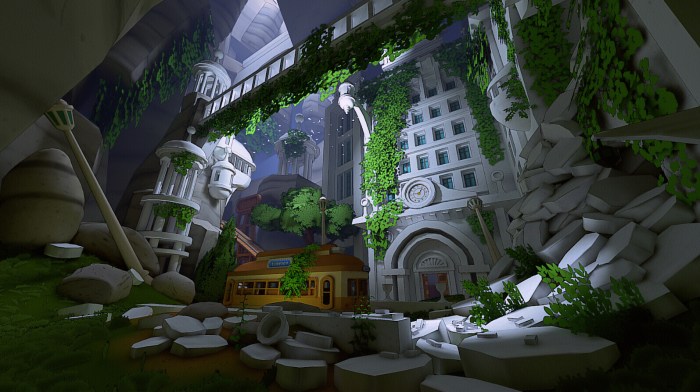
Ever dreamt of soaring across breathtaking landscapes, uncovering hidden secrets, and shaping your own destiny in a virtual world? That’s the magic of open-world exploration in video games! From sprawling fantasy realms to futuristic metropolises, these games offer unparalleled freedom, letting you choose your path and dictate your adventure. But what makes a truly
-compelling* open world? We’ll delve into the game mechanics, narrative structures, technical wizardry, and even the future of this ever-evolving genre.
We’ll explore how environmental storytelling, rewarding systems, and diverse biomes intertwine to create immersive experiences. We’ll also examine the delicate balance between player agency and a strong narrative, the technical challenges of building massive worlds, and the unique opportunities presented by online multiplayer. Get ready to embark on a journey through the captivating world of open-world game design!
Defining Open World Exploration in Games
Open world exploration in video games offers players unparalleled freedom, allowing them to traverse expansive virtual landscapes at their own pace and discover hidden secrets, engaging in diverse activities beyond the main storyline. This contrasts sharply with the linear progression found in many other game genres.Open world exploration hinges on several key elements. A sense of scale and discovery is paramount; the world should feel vast and full of opportunities for exploration, rewarding curiosity and rewarding players for venturing off the beaten path.
Meaningful choices and consequences are also crucial; player actions should have tangible effects on the game world, fostering a sense of agency and immersion. Finally, a compelling narrative and engaging side activities enrich the experience, providing reasons to explore beyond the simple desire for discovery. A truly compelling open world seamlessly integrates exploration with the core gameplay loop, making the journey as rewarding as the destination.
Core Elements of Compelling Open World Experiences
Several factors contribute to creating a truly engaging open world experience. A believable and richly detailed world is essential, one that feels lived-in and responsive to player actions. This includes diverse environments, interesting points of interest, and a believable ecosystem of characters and creatures. Furthermore, a robust and intuitive control scheme is necessary to facilitate seamless exploration.
Players should feel empowered to traverse the world easily and efficiently, whether on foot, by vehicle, or by other means. The game mechanics themselves should also encourage exploration, perhaps through rewarding systems or intriguing puzzles that are discovered during exploration. Finally, a strong sense of progression and accomplishment keeps players motivated. This can be achieved through a compelling narrative, the acquisition of new abilities, or the unlocking of new areas and opportunities.
Open World Exploration vs. Linear Game Design
Open world exploration stands in stark contrast to linear game design, which typically follows a predetermined path. Linear games guide the player through a series of levels or areas, offering limited choices and restricting exploration. The focus is usually on a tightly scripted narrative and a series of carefully designed challenges. Open world games, on the other hand, prioritize freedom and player agency.
They offer a much larger, more interconnected game world, allowing players to approach challenges and objectives in various ways. The narrative often adapts to player choices, leading to diverse gameplay experiences. While linear games excel at delivering a focused and controlled narrative, open world games provide unparalleled freedom and replayability.
Comparison of Open-World Game Exploration Approaches
The following table compares three popular open-world games, highlighting their distinct approaches to exploration:
| Game | Exploration Style | Rewards | World Design |
|---|---|---|---|
| The Legend of Zelda: Breath of the Wild | Free-form, puzzle-driven, emphasis on verticality | Hidden shrines, powerful weapons, unique items | Vast and varied landscape with distinct biomes |
| Grand Theft Auto V | Free-roaming, sandbox style, emphasis on activities and side missions | Money, vehicles, property, reputation | Detailed urban environment with diverse districts and surrounding countryside |
| Red Dead Redemption 2 | Narrative-driven, environmental storytelling, emphasis on character interaction | Story progression, unique items, character bonds | Expansive and immersive Wild West setting with realistic details |
Game Mechanics that Enhance Exploration
Open-world games thrive on exploration, but simply placing the player in a large map isn’t enough. Engaging mechanics are crucial to incentivize players to venture beyond the initial areas and uncover the hidden gems within the game world. These mechanics work in concert to create a compelling loop of discovery, reward, and further exploration. Let’s delve into some key elements.
Environmental Storytelling
Environmental storytelling uses the game world itself to convey narrative information, often without explicit dialogue or cutscenes. Imagine stumbling upon a crumbling village, the remnants of a past conflict subtly hinted at through scattered weapons, overgrown pathways, and faded murals. This approach encourages exploration by rewarding players with narrative pieces that are discovered organically, fueling their curiosity to uncover the complete story.
The player actively participates in reconstructing the narrative by piecing together clues from the environment, creating a more immersive and engaging experience than simply being told the story. Games like
The Last of Us Part II* masterfully use this technique, revealing crucial plot points through environmental details and subtle interactions with the game world.
Reward Systems
Reward systems are a cornerstone of encouraging exploration. The promise of valuable loot, powerful weapons, or unique items acts as a powerful motivator. Achievements and collectibles further incentivize thorough exploration, providing a sense of accomplishment and completion. The allure of finding a rare weapon hidden within a treacherous cave or uncovering a secret area brimming with resources significantly boosts player engagement.
Games like
The Legend of Zelda
Breath of the Wild* exemplify this, rewarding persistent exploration with powerful equipment, hidden shrines, and breathtaking vistas. The satisfaction of unlocking a challenging achievement also adds a layer of depth to the reward system.
Varied Terrain and Biomes
The visual appeal of a game world is undeniable, but varied terrain and biomes go beyond mere aesthetics. They provide a constant stream of new experiences and challenges. A game with diverse environments, from lush forests to arid deserts, snowy mountains to underwater caves, keeps players engaged and prevents the world from feeling monotonous. Each biome can present unique challenges, resources, and encounters, ensuring that exploration remains rewarding and dynamic.
Games likeRed Dead Redemption 2*, with its expansive and diverse landscapes, effectively showcase the power of varied terrain in fostering exploration. The sheer scale and variety of the world itself invite players to journey far and wide.
Innovative Exploration Mechanics
Several innovative game mechanics can significantly boost exploration. These mechanics go beyond the traditional “find and collect” model, adding layers of intrigue and challenge.
- Dynamic World Events: Random events that unfold in different locations, rewarding players who are actively exploring the world. This could include encountering unique creatures, witnessing unexpected events, or discovering temporary resources.
- Hidden Puzzles and Challenges: Integrating environmental puzzles that require players to explore and interact with the world to solve them. These puzzles can be tied to rewards or unlock access to new areas.
- Reputation and Faction Systems: Exploring different regions might affect the player’s reputation with various factions, opening up new quests, alliances, or trading opportunities. This adds a social dimension to exploration.
- Procedurally Generated Content: Utilizing procedural generation to create unique and unpredictable landscapes, ensuring that every playthrough offers a fresh exploration experience. This prevents the world from becoming predictable and stale.
- Exploration-Based Crafting: Requiring players to gather unique resources from different biomes to craft powerful items or upgrades. This incentivizes exploring diverse areas to find the necessary materials.
The Impact of Narrative on Open World Exploration
A compelling narrative can dramatically enhance the experience of open-world exploration, transforming a simple journey across a map into a deeply engaging and memorable adventure. The effectiveness lies in how the story weaves itself into the environment, encouraging players to uncover its secrets at their own pace, rewarding curiosity and exploration with meaningful plot developments and character interactions. A well-integrated narrative doesn’t just exist alongside the gameplay; it becomes an integral part of it, motivating players to delve deeper into the game world.
Seamless Narrative Integration in Open World Exploration
Effective narrative integration in open worlds avoids the feeling of forced linearity. Instead, it presents the story organically, allowing players to discover pieces of the narrative at their own pace. Imagine a world where scattered notes, overheard conversations, and environmental storytelling reveal fragments of a larger mystery, enticing the player to explore further. The Witcher 3: Wild Hunt excels at this.
The main questline is compelling, but the side quests, often interwoven with the main narrative, provide rich character development and intriguing lore, revealing details about the world’s history and politics, while encouraging further exploration. Another example is Red Dead Redemption 2, where the vast and detailed world is populated with compelling characters and side stories that enrich the player’s understanding of the setting and its inhabitants, prompting further exploration to uncover more of their tales.
The narrative unfolds naturally, as the player stumbles upon events and encounters that gradually reveal the larger story.
Balancing Player Agency and Compelling Storylines
Balancing player agency with a strong narrative in open-world games presents a significant challenge. Too much freedom can lead to a disjointed or fragmented story, while too much linearity can stifle the sense of exploration and discovery that defines the genre. Successful games find a delicate balance. The Elder Scrolls V: Skyrim provides a great example of a mostly player-driven narrative where the main quest is just one thread among many, allowing players to pursue their own goals and create their own stories within the world.
However, even with this freedom, the main storyline remains compelling and engaging for those who choose to follow it. The key is to create a world where the narrative organically unfolds based on the player’s choices and actions, while still offering a core storyline that provides direction and purpose. A well-designed open world offers meaningful choices that impact both the immediate environment and the overarching narrative.
Enriching Exploration Through Side Quests and Optional Content
Side quests and optional content are crucial for enriching the open-world exploration experience. They provide opportunities to delve deeper into the game’s lore, meet unique characters, and discover hidden areas or secrets. These activities should feel organically integrated into the world, rather than tacked on as afterthoughts. Breath of the Wild, for example, utilizes its side quests effectively.
Many are tied to discovering shrines and exploring specific regions, thus seamlessly merging exploration and narrative progression. The rewards for completing these quests aren’t just loot; they often provide insight into the world’s history and mythology, adding layers of depth to the player’s understanding of Hyrule. These optional activities extend the game’s lifespan and create a sense of discovery that keeps players engaged long after completing the main storyline.
Comparative Analysis of Narrative Approaches
| Game | Narrative Approach | Player Agency | Exploration Impact |
|---|---|---|---|
| The Witcher 3: Wild Hunt | Nonlinear, interwoven main and side quests | High; players can prioritize quests and explore freely | Exploration is heavily incentivized; uncovering lore deepens the narrative |
| Grand Theft Auto V | Linear main story with open-world sandbox elements | Moderate; main story is relatively linear, but side activities offer freedom | Exploration is driven by side activities and discovering hidden content; the main story provides less incentive for exploration |
Technical Aspects of Open World Design
Creating truly immersive and expansive open worlds presents a formidable technical challenge for game developers. The sheer scale of these environments, coupled with the desire for high-fidelity visuals and responsive gameplay, pushes the boundaries of current hardware and software capabilities. Balancing the ambition of the design with the limitations of technology is a constant balancing act, demanding innovative solutions at every stage of development.
Technical Challenges in Creating Large, Detailed Open Worlds
The creation of vast, detailed open worlds necessitates overcoming several significant hurdles. Memory management is paramount; loading and unloading assets efficiently is crucial to prevent performance bottlenecks. Maintaining a consistent level of detail across such a large area, while ensuring smooth transitions between different levels of detail (LODs), is a complex task. Furthermore, optimizing the game engine to handle the vast amount of data required for a believable environment—including terrain, vegetation, objects, and characters—is a significant engineering undertaking.
The complexity is further amplified by the need for seamless interaction between all these elements, ensuring a fluid and responsive player experience. Consider the example of a game like
Red Dead Redemption 2*, which boasts a massive, highly detailed world; its creation involved significant optimization efforts to maintain performance across a wide range of hardware.
Procedural Generation in Open-World Design
Procedural generation offers a powerful solution to some of the challenges inherent in creating large open worlds. This technique uses algorithms to automatically generate game content, such as terrain, vegetation, and even buildings, based on a set of rules and parameters. This approach significantly reduces the workload on artists and designers, allowing for the creation of much larger and more varied worlds than would be feasible through manual creation alone.
For example, games like
No Man’s Sky* rely heavily on procedural generation to create its seemingly infinite universe of planets, each with unique landscapes and ecosystems. The advantages are obvious
vast content creation with a smaller team, increased variability, and the potential for truly unique and unpredictable player experiences. However, it’s important to note that procedural generation also presents challenges; achieving a high level of visual fidelity and ensuring the generated content is coherent and engaging requires careful design and implementation.
Optimization Techniques for Expansive Game Worlds
Maintaining optimal performance in expansive game worlds requires a multi-pronged approach. Level of Detail (LOD) systems are crucial, dynamically adjusting the level of detail of objects based on their distance from the player. This significantly reduces the processing load on the GPU. Occlusion culling hides objects that are not visible to the player, further improving performance. Streaming techniques load and unload assets as the player moves through the world, preventing the game from trying to load everything at once.
Efficient use of shaders and textures also plays a vital role. Finally, intelligent use of physics engines, optimizing the number of physics calculations, is critical for a smooth and responsive experience. Consider the success of
The Witcher 3
Wild Hunt*; its developers employed a sophisticated combination of these techniques to deliver a vast and beautiful world without sacrificing performance.
Game Engine Handling of Open-World Environments
Game engines play a critical role in how open worlds are managed. Different engines offer varying degrees of support for the tools and techniques needed for open-world development.
- Unreal Engine: Offers robust tools for world building, including advanced LOD systems, efficient streaming, and support for large-scale simulations. Its Blueprint visual scripting system allows for rapid prototyping and iteration.
- Unity: Provides a versatile and accessible platform for open-world development, with a large community and extensive asset store. Its job system and ECS (Entity Component System) architecture are well-suited for managing complex scenes.
- CryEngine: Known for its powerful rendering capabilities and realistic visuals, CryEngine excels in creating highly detailed and visually stunning open worlds. Its sandbox-like nature allows for a great deal of creative freedom, but it has a steeper learning curve than other engines.
Open World Exploration in Online Games

The advent of persistent online worlds has revolutionized open-world exploration, transforming solitary journeys into shared adventures. The dynamic nature of online multiplayer introduces unique challenges and exciting opportunities, fundamentally altering how players interact with and experience the game world. The addition of other players dramatically shifts the balance between individual agency and collaborative gameplay, creating a constantly evolving and unpredictable landscape.Online multiplayer introduces a layer of emergent gameplay not possible in single-player experiences.
The unpredictable actions of other players can lead to unexpected encounters, collaborations, and conflicts, significantly impacting the overall exploration experience. This social element can both enhance and complicate the design process, demanding careful consideration of game mechanics and narrative structures.
Unique Challenges and Opportunities of Online Multiplayer in Open-World Games
The dynamic nature of online multiplayer presents both significant challenges and exciting opportunities for open-world game design. Maintaining a stable and engaging experience for a large number of concurrent players requires robust server infrastructure and efficient game mechanics. Balancing player agency with the need for a cohesive narrative and gameplay loop is a crucial design consideration. However, the potential for spontaneous player interactions and emergent gameplay creates a level of richness and unpredictability absent in single-player games.
The ability to cooperate with or compete against other players drastically expands the possibilities for exploration and discovery, fostering a sense of shared experience and community. For example, a group of players might stumble upon a hidden area together, sharing the thrill of the discovery and collaboratively overcoming challenges within that area. Conversely, the presence of player-versus-player (PvP) combat can transform otherwise peaceful exploration into a tense and thrilling survival experience.
Social Interaction Enhancing Open-World Experiences
Social interaction fundamentally reshapes the open-world experience in online games. Cooperative gameplay, such as raiding a challenging dungeon or completing a complex quest together, strengthens bonds between players and fosters a sense of shared accomplishment. Conversely, competitive interactions, like vying for control of a valuable resource or engaging in player-versus-player combat, add an extra layer of strategic depth and excitement to exploration.
The ability to form guilds, alliances, or even rivalries significantly impacts the player’s experience and motivations, influencing their exploration patterns and goals. For example, a player might choose to explore a specific region to gather resources for their guild, or they might avoid a certain area known for intense PvP encounters. The emergent storytelling possibilities are immense; players might create their own narratives through their interactions, forming lasting memories and unique experiences not possible in a solo environment.
Design Considerations: Single-Player vs. Multiplayer Open Worlds
Single-player and multiplayer open-world games require distinct design approaches. Single-player games prioritize a carefully crafted narrative and a consistent player experience. World design often focuses on creating a sense of wonder and discovery, with carefully placed points of interest and compelling environmental storytelling. Multiplayer games, however, must account for the unpredictable actions of other players, requiring more robust systems for handling player interaction, conflict resolution, and resource management.
The balance between individual agency and the overall game state is a key challenge. For example, a single-player game might feature a rare resource found in a specific location, while a multiplayer game would need to consider the impact of multiple players competing for that same resource, potentially leading to conflicts and emergent gameplay.
Examples of Online Games with Compelling Open-World Exploration
The following games showcase compelling examples of open-world exploration within online multiplayer environments:
- World of Warcraft: A massively multiplayer online role-playing game (MMORPG) offering a vast world with diverse environments, challenging dungeons, and rich lore. Players can explore the world solo or with others, engaging in cooperative quests, PvP combat, and social interactions within a thriving community.
- The Elder Scrolls Online: An MMORPG set in the vast world of Tamriel, allowing players to explore iconic locations from the Elder Scrolls series. It combines cooperative PvE with optional PvP elements, allowing players to experience the world in various ways.
- Destiny 2: A first-person shooter MMORPG with a focus on shared-world activities and cooperative gameplay. Players explore various planets and locations, engaging in raids, strikes, and other activities with other players.
- Guild Wars 2: Known for its dynamic events and large-scale world bosses, Guild Wars 2 offers a unique open-world experience where players can collaborate to overcome challenges and shape the world around them.
- Black Desert Online: A sandbox MMORPG emphasizing player freedom and customization. The vast world offers opportunities for exploration, trading, combat, and other activities, with a strong emphasis on player interaction and community.
The Future of Open World Exploration
The landscape of open-world gaming is constantly evolving, driven by advancements in technology and shifting player expectations. We’re moving beyond simply vast maps filled with markers; the future of open-world exploration promises richer, more dynamic, and deeply personalized experiences. This will be fueled by increasingly sophisticated AI, realistic physics engines, and the immersive power of virtual and augmented reality.
Procedural Generation and Dynamic Worlds
Procedural generation techniques are already transforming open-world design, allowing developers to create expansive environments with significantly reduced development time and resources. Imagine a game where the landscape, flora, fauna, and even the quests themselves are algorithmically generated, resulting in a truly unique experience for each player. Games like No Man’s Sky have demonstrated the potential, albeit with initial shortcomings, showcasing how this technology can create near-infinite universes to explore.
Future iterations will refine this technology, leading to more cohesive and compelling procedurally generated worlds, seamlessly blending handcrafted elements with algorithmically created content. This will allow for truly massive game worlds without the immense cost and development time currently required.
The Rise of VR/AR in Open World Exploration
Virtual and augmented reality technologies hold immense potential for revolutionizing open-world exploration. VR can offer unprecedented levels of immersion, transporting players directly into the game world. Imagine scaling a towering mountain in a virtual reality climbing game, feeling the wind on your face and the terrain beneath your feet with haptic feedback. Similarly, AR can overlay game elements onto the real world, blurring the lines between virtual and physical spaces.
Imagine exploring a historical city, with AR highlighting hidden passages and interactive elements overlaid on your real-world view, enriching the experience with historical context and interactive narratives. The integration of these technologies will not only enhance the visual and sensory aspects of exploration but also provide entirely new gameplay mechanics and possibilities.
Evolving Player Expectations: Beyond the Checklist
Players are increasingly demanding more than just vast maps filled with repetitive activities. They crave meaningful choices, emergent gameplay, and a sense of agency within the game world. The “checklist” mentality of completing markers on a map is being replaced by a desire for authentic, player-driven narratives. This shift requires a move away from linear quest structures towards systems that allow players to shape the world and its story through their actions.
Games like Red Dead Redemption 2, with its focus on player choice and consequence, represent a step in this direction. Future open-world games will need to focus on providing emergent narratives, meaningful interactions with NPCs, and systems that reward exploration and player agency.
Hypothetical Open-World Game Concept: Echoes of the Ancients
“Echoes of the Ancients” is a VR open-world game set on a procedurally generated alien planet. Players explore this vibrant and dangerous world using a combination of jetpack-assisted traversal and ancient alien technology that allows them to temporarily manipulate the environment. Exploration is driven by uncovering fragments of an advanced civilization’s history, scattered throughout the planet in the form of interactive puzzles and environmental storytelling.
The player’s actions affect the environment and the narrative, creating a truly dynamic and personalized experience. For example, reactivating an ancient energy source might alter the landscape, revealing new pathways and resources, while neglecting a decaying structure could trigger a catastrophic event that reshapes the world. The game will leverage VR’s immersive capabilities to create a visceral sense of exploration, danger, and discovery.
This combination of procedural generation, environmental storytelling, and player agency will provide a truly unique and unforgettable open-world experience.
Illustrative Examples of Open World Environments
Open-world games thrive on the diversity and richness of their environments. A compelling setting isn’t just a backdrop; it’s a character in itself, driving player exploration and shaping the narrative. Let’s delve into three distinct examples, showcasing the potential for creative world-building.
The Scorched Sands of Xylos
Xylos is a vast desert environment characterized by towering, rust-colored mesas that pierce the perpetually hazy sky. Giant, wind-sculpted sand dunes stretch as far as the eye can see, punctuated by occasional oases teeming with surprisingly diverse life. The flora consists mainly of hardy, drought-resistant shrubs and cacti, their spiny forms adapted to the harsh climate. Twisted, ancient baobab trees, their trunks scarred by centuries of sandstorms, offer rare shade and shelter.
Fauna includes nimble sand vipers, elusive desert foxes with exceptional camouflage, and colossal sandworms that burrow beneath the surface, occasionally revealing themselves in devastating sand geysers. Points of interest include crumbling ancient ruins, hinting at a forgotten civilization, treacherous canyons concealing hidden temples and valuable resources, and a colossal, perpetually shifting sand sea, rumored to contain a legendary lost city.
The ever-present threat of sandstorms, intense heat, and scarce water resources adds a constant challenge to exploration.
The Whispering Woods of Eldoria
Eldoria is a fantastical forest brimming with vibrant life and magic. Giant, luminous mushrooms illuminate the forest floor, casting an ethereal glow on the twisting, ancient trees that reach towards a sky perpetually veiled in mist. Crystal rivers wind through the woods, their waters shimmering with bioluminescent algae. Strange, bioluminescent flora glows in a spectrum of colours, illuminating hidden pathways and secret grottos.
The fauna includes graceful, winged creatures with iridescent feathers, mischievous sprites that inhabit the treetops, and majestic, ancient treants, their bark etched with the history of the forest. Points of interest include hidden waterfalls cascading into crystal-clear pools, ancient ruins overgrown by nature, and mysterious temples dedicated to forgotten deities. The forest itself is alive, reacting to the player’s presence, with pathways shifting, secrets revealed, and challenges emerging as exploration progresses.
The air hums with arcane energy, and the very trees seem to whisper secrets to those who listen closely.
Neo-Veridia: A City in the Clouds
Neo-Veridia is a futuristic cityscape that stretches towards the heavens, a testament to humanity’s ambition and technological prowess. Towering skyscrapers pierce the clouds, connected by a network of elevated walkways, sky bridges, and automated transport systems. The architecture blends sleek, modern designs with elements of bio-engineering, with lush vertical gardens adorning many buildings. Flying vehicles zip between structures, while drones patrol the skies.
Exploration focuses on verticality, with players navigating intricate networks of interconnected buildings, accessing hidden rooftop gardens, and uncovering clandestine laboratories and underground settlements. Points of interest include sprawling marketplaces teeming with futuristic technology and exotic goods, high-security corporate headquarters, and abandoned sectors of the city that hold clues to its past and secrets yet to be discovered. The city’s constant hum of technological activity and the ever-present threat of corporate surveillance add a unique layer to the exploration experience.
Conclusive Thoughts
From the sprawling landscapes of
-The Legend of Zelda: Breath of the Wild* to the vibrant online worlds of
-Grand Theft Auto Online*, open-world exploration continues to captivate players worldwide. The future promises even more immersive experiences, driven by advancements in technology and a constant push for innovation. As developers strive to create ever more detailed and dynamic worlds, one thing remains certain: the allure of open-world exploration will continue to draw players into unforgettable virtual adventures.
So, grab your controller, prepare for discovery, and get ready to lose yourself in the boundless possibilities that await!
FAQ Corner
What are some common pitfalls in open-world design?
Common pitfalls include repetitive content, poor optimization leading to performance issues, a lack of compelling narrative integration, and an overwhelming sense of emptiness despite the vastness of the world.
How do open-world games balance player freedom with a structured narrative?
Many games achieve this balance through emergent storytelling, offering a core narrative while allowing player choices to significantly impact the experience. Side quests and optional content can also expand the narrative without restricting player agency.
What role does procedural generation play in open-world design?
Procedural generation helps create large, diverse worlds efficiently by algorithmically generating elements like terrain, flora, and even buildings, reducing development time and increasing variety.
How are open-world games evolving with the rise of VR/AR?
VR/AR technologies offer unprecedented immersion, allowing players to physically interact with open-world environments in entirely new ways, blurring the lines between the virtual and real world.