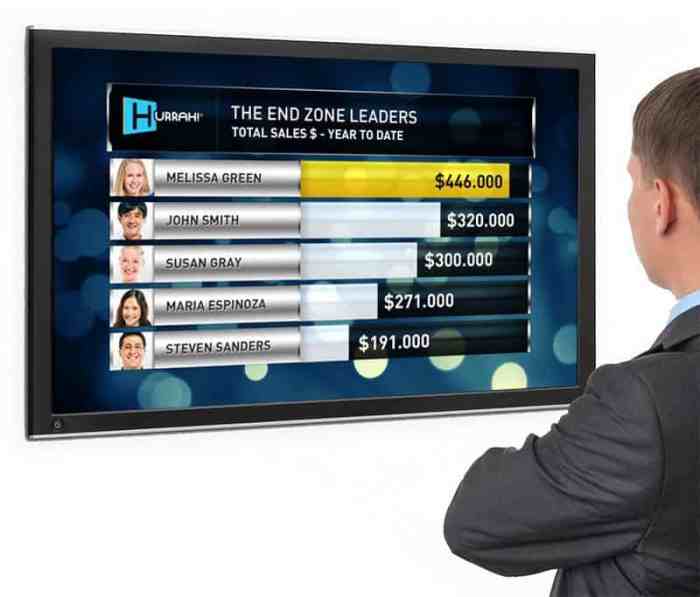
Ever wondered how a simple list of names and scores can ignite fierce competition and keep players hooked for hours? That’s the magic of competitive leaderboards! From classic arcade games to sprawling online worlds, leaderboards have become a cornerstone of player engagement, fueling motivation and creating a vibrant sense of community. But how do they work their magic?
What are the secrets behind their design and the challenges in keeping them fair and fun? Let’s dive in!
This exploration will uncover the fascinating world of competitive leaderboards, examining their core components, design principles, and the crucial role they play in shaping the online gaming experience. We’ll delve into the psychology behind their effectiveness, explore technical considerations for implementation, and discuss strategies for preventing cheating and fostering a positive competitive environment. Get ready to level up your understanding of leaderboards!
Defining Competitive Leaderboards
Competitive leaderboards are a powerful tool for boosting engagement and fostering a sense of community within games and other applications. They provide a clear, visual representation of player performance, driving healthy competition and rewarding achievement. Essentially, they transform individual progress into a shared, dynamic experience.
A leaderboard system comprises several key components. First, there’s the scoring mechanism: how player performance is quantified. This could be points earned, levels completed, time taken, or any other relevant metric. Then comes the ranking algorithm, which sorts players based on their scores. Finally, the display interface presents this ranking in a user-friendly format, often allowing for filtering and sorting options.
Data storage and security are also crucial components, ensuring accurate and reliable ranking information.
Leaderboard Display Formats
Leaderboards can be structured in various ways to cater to different player preferences and game mechanics. A global leaderboard shows the top players across the entire player base. This fosters a sense of wide-scale competition and allows players to compare themselves against the very best. In contrast, a friends-only leaderboard focuses on competition within a player’s social circle, creating a more intimate and less daunting competitive environment.
Segmented leaderboards break down the competition into smaller groups, such as by skill level, age group, or even specific game modes. This ensures fair competition and allows players to see how they stack up against similarly skilled opponents. For example, a racing game might have separate leaderboards for beginners, intermediate, and expert players.
Psychological Impact of Leaderboards
Leaderboards tap into fundamental psychological drivers. The desire for recognition and achievement is a powerful motivator. Seeing your name climb the ranks provides a sense of accomplishment and encourages continued play. The competitive aspect can also increase engagement and create a feeling of community among players. However, it’s important to note that leaderboards can also be demotivating for some players, particularly those consistently placed lower.
Well-designed leaderboards should therefore strive to balance competition with encouragement and inclusivity, perhaps by incorporating elements such as progress bars or personal best scores alongside the overall ranking.
Leaderboard Ranking Algorithm
A simple leaderboard algorithm involves sorting players based on their scores in descending order. This can be efficiently achieved using various sorting algorithms, such as merge sort or quicksort.
A basic algorithm could be represented as:
- Obtain a list of players and their associated scores.
- Sort the list based on scores in descending order (highest score first).
- Display the sorted list, showing player names and their ranks.
This basic approach can be expanded upon to handle ties, update scores dynamically, and incorporate other ranking factors as needed. For instance, a tie-breaking mechanism could prioritize players who achieved their score faster or with fewer resources. More sophisticated algorithms might incorporate Elo ratings or other statistical methods to more accurately reflect player skill.
Leaderboard Design and Implementation
Crafting compelling and effective leaderboards requires a blend of user-friendly design and robust technical implementation. A well-designed leaderboard not only displays rankings accurately but also motivates players and enhances the overall gaming experience. Let’s explore the key aspects of building a successful leaderboard system.
User-Friendly Leaderboard Design
A visually appealing and intuitive leaderboard is crucial for user engagement. Key design considerations include clear and concise presentation of data, responsive layout for various screen sizes, and a consistent visual style that aligns with the overall game aesthetic. Consider using color-coding to highlight top performers, incorporating progress bars to show player advancement, and employing smooth animations to enhance the user experience.
Avoid overwhelming the user with excessive information; prioritize key metrics and keep the design clean and uncluttered. Regular A/B testing of different design elements can help optimize the leaderboard for maximum impact.
Scalable Leaderboard System Architecture
Building a leaderboard system that can handle a large number of players and frequent updates requires careful planning. A crucial aspect is choosing the right technology stack. Consider using a distributed database system like Cassandra or Redis, which are designed to handle high-volume read and write operations efficiently. Employing caching mechanisms, such as Memcached or Redis, can significantly reduce database load and improve response times, especially for frequently accessed data like top 10 rankings.
Implement robust error handling and monitoring to ensure system stability and identify potential bottlenecks. A well-designed API is essential for seamless integration with the game client and other systems.
Data Storage Solutions for Leaderboards
The choice of data storage solution significantly impacts the performance and scalability of your leaderboard. Relational databases (like MySQL or PostgreSQL) are suitable for smaller leaderboards with less frequent updates. However, for larger-scale applications with high concurrency, NoSQL databases such as Cassandra or MongoDB offer better scalability and performance. Consider using a key-value store like Redis for caching frequently accessed data, significantly improving response times for leaderboard queries.
The optimal solution depends on factors like the expected number of players, update frequency, and query patterns. Each solution has its strengths and weaknesses regarding scalability, data consistency, and query performance.
Leaderboard Mockup
Here’s a simple HTML table representing a responsive leaderboard. The table utilizes CSS for styling and responsiveness, adapting its layout to different screen sizes.
| Rank | Player Name | Score | Last Updated |
|---|---|---|---|
| 1 | PlayerOne | 1500 | 2023-10-27 10:30 |
| 2 | PlayerTwo | 1200 | 2023-10-27 11:15 |
| 3 | PlayerThree | 1000 | 2023-10-27 12:00 |
The Role of Leaderboards in Online Games
Leaderboards are more than just a list of high scores; they are powerful tools that significantly shape the player experience in online games. Their impact extends far beyond simple competition, influencing engagement, retention, and the overall longevity of a game. By strategically implementing leaderboards, developers can cultivate a thriving and competitive community, fostering a sense of accomplishment and encouraging continued play.Leaderboards influence player engagement and retention by providing a clear, visible goal for players to strive towards.
The desire to climb the ranks, to surpass others, and to achieve recognition fuels motivation and encourages players to invest more time and effort into the game. This competitive drive is a key factor in player retention, as players are continually incentivized to return to the game to improve their position on the leaderboard. The public display of achievement also provides social validation, boosting player morale and encouraging continued participation.
Competitive Elements Complementing Leaderboards
Several competitive elements can be integrated into online games to synergize with leaderboards, amplifying their impact on player engagement. These elements work in conjunction with the leaderboard to create a more dynamic and rewarding gameplay loop. Examples include daily/weekly challenges that contribute to leaderboard scores, in-game events that offer unique opportunities for leaderboard advancement, and guild/team competitions where collective progress contributes to a team’s leaderboard standing.
These additions provide a sense of progression and variety, preventing player burnout and maintaining consistent engagement.
Leaderboard Systems in Popular Online Games
A comparison of leaderboard systems across different game genres reveals diverse approaches to implementing and utilizing this feature. The effectiveness of each system depends on the game’s mechanics, target audience, and overall design philosophy.
- World of Warcraft (MMORPG): WoW features multiple leaderboards, categorized by activities like raiding, PvP, and achievements. Strengths include comprehensive tracking of various accomplishments and a strong sense of community around achieving high rankings. Weaknesses include the potential for leaderboard manipulation and the complexity of the system for new players.
- League of Legends (MOBA): League of Legends utilizes ranked ladders, displaying players’ tiers and ranks. Strengths include a clear progression system and a strong focus on competitive play. Weaknesses include a potential for toxicity and the emphasis on individual skill over team synergy in some aspects of the leaderboard.
- Fortnite (Battle Royale): Fortnite’s leaderboards focus on overall wins and eliminations, often segmented by game mode. Strengths include simplicity and immediate feedback. Weaknesses include a high degree of randomness in Battle Royale matches, making consistent leaderboard performance challenging.
Reward Systems Integrated with Leaderboards
Reward systems are crucial for reinforcing the motivational aspects of leaderboards. They transform abstract rankings into tangible benefits, further incentivizing players to compete.
- In-game currency: Offering in-game currency rewards for high leaderboard positions provides players with resources to enhance their gameplay experience, purchasing upgrades or cosmetic items.
- Cosmetic items: Exclusive skins, outfits, or emotes awarded to top-ranking players provide a sense of prestige and social status, increasing their desirability.
- Exclusive access: Granting access to exclusive game content, events, or features to top players creates a sense of exclusivity and rewards dedicated players.
Challenges and Considerations
Creating and maintaining competitive leaderboards isn’t just about displaying scores; it’s about fostering a fair and enjoyable experience for all players. Several challenges arise when designing and implementing these systems, requiring careful consideration to ensure the integrity and longevity of the competitive environment. Ignoring these issues can lead to a fractured community and a diminished player base.Leaderboard manipulation poses a significant threat to the fairness of competition.
Players may resort to cheating or exploiting game mechanics to artificially inflate their scores, undermining the achievements of honest players and creating an environment of distrust. This not only damages the integrity of the leaderboard itself but also negatively impacts the overall gaming experience.
Leaderboard Manipulation and Mitigation Strategies
Preventing leaderboard manipulation requires a multi-pronged approach. Robust anti-cheat measures are crucial, employing techniques like server-side validation of scores, detection of unusual patterns in gameplay, and the use of sophisticated algorithms to identify suspicious activity. Regular updates to the game and its anti-cheat systems are also essential to stay ahead of evolving cheating methods. Transparency is key; players should understand the measures in place to ensure fair play, building trust and encouraging reporting of suspicious behavior.
For example, a game might implement a system where player reports trigger automated reviews of gameplay data, followed by manual investigation if necessary. This combination of automated detection and human oversight significantly increases the chances of identifying and penalizing cheaters effectively. Furthermore, clear and consistently enforced penalties for cheating, ranging from temporary bans to permanent account suspensions, act as a strong deterrent.
Designing Inclusive and Accessible Leaderboards
Leaderboards should be designed to be inclusive and accessible to all players, regardless of skill level. This means considering different player demographics and skill levels. Offering multiple leaderboards categorized by skill level or game mode can help alleviate the pressure on less experienced players who might feel discouraged by competing against highly skilled individuals. For example, separate leaderboards for casual and competitive modes allow players to choose the level of competition that suits them.
Clear and concise rules, readily available to all players, are crucial to ensure everyone understands the terms of competition. Furthermore, the leaderboard’s visual presentation should be accessible, adhering to accessibility guidelines for color contrast, font size, and alternative text for images. Consider players with visual impairments, providing alternative ways to access the information, such as audio descriptions or textual representations.
Ethical Considerations and Negative Player Experiences
The competitive nature of leaderboards can sometimes foster toxic behavior. Players may engage in harassment, verbal abuse, or other forms of negative interaction with those who are perceived as threats to their ranking. Developers need to proactively address this by implementing reporting systems for toxic behavior and swiftly taking action against offenders. Promoting positive sportsmanship and a culture of respect through in-game messages, community guidelines, and community moderation can also significantly reduce negative interactions.
Moreover, designing leaderboards that focus on personal improvement and celebrating achievements rather than solely on ranking can help shift the focus from cutthroat competition to individual progress. For instance, highlighting milestones achieved by players, such as completing challenging levels or reaching specific score thresholds, can encourage a more positive and inclusive gaming environment. The goal is to create a competitive yet supportive community where players can enjoy the challenge without feeling undue pressure or experiencing negativity.
Future Trends and Innovations
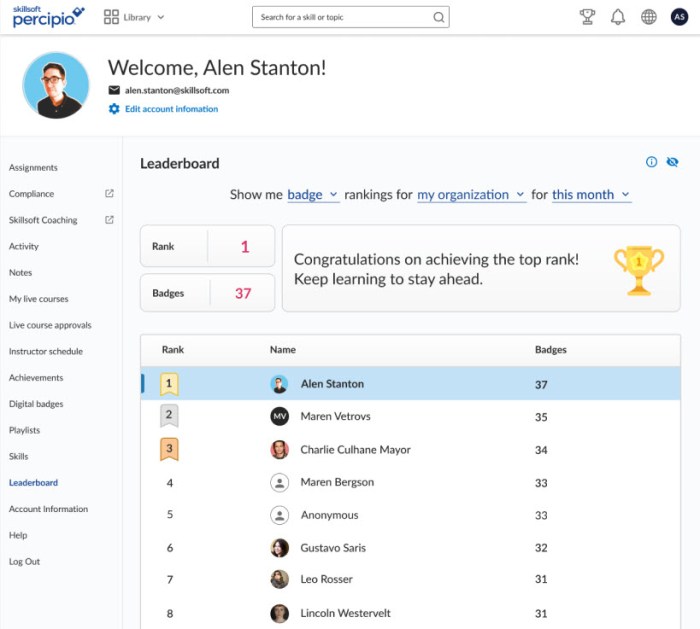
The world of competitive leaderboards is constantly evolving, driven by advancements in technology and a growing demand for more engaging and personalized competitive experiences. We’re moving beyond simple ranked lists to dynamic, interactive systems that leverage the power of AI and immersive technologies. This section explores some of the exciting possibilities shaping the future of competitive leaderboards.The integration of AI and emerging technologies like VR/AR will fundamentally alter how we design, implement, and interact with leaderboards.
These innovations promise to create richer, more immersive, and personalized competitive experiences, ultimately enhancing player engagement and satisfaction.
AI-Powered Ranking Systems and Personalized Leaderboards
AI is poised to revolutionize leaderboard ranking. Instead of relying solely on raw scores, AI algorithms can analyze player performance across multiple metrics, considering factors like skill level, play style, and even in-game context. This allows for more nuanced and accurate rankings, moving beyond simple numerical comparisons. For instance, an AI system could identify players who consistently perform well under pressure, awarding them a higher ranking even if their raw score isn’t the highest.
Personalized leaderboards, tailored to individual player skill levels and preferences, will also become more common. Imagine a system that automatically adjusts the difficulty of challenges and presents players with relevant competitors based on their performance and progress. This fosters a more rewarding and engaging competitive environment, catering to a wider range of players.
The Impact of VR/AR on Leaderboard Design and Implementation
Virtual and augmented reality offer exciting opportunities to transform the leaderboard experience. In VR games, leaderboards could be integrated seamlessly into the game environment, appearing as holographic displays or interactive 3D structures. Players could physically interact with the leaderboard, examining individual player profiles or celebrating their achievements within the virtual world. AR, on the other hand, could overlay leaderboard information onto the real world, enhancing the competitive experience even outside the game itself.
Imagine seeing your friends’ scores projected onto your living room wall as you play a mobile game. These immersive experiences significantly enhance the social and competitive aspects of leaderboards.
Conceptual Design of an Innovative Leaderboard
Let’s imagine a leaderboard that integrates real-time updates, robust social features, and dynamic ranking adjustments.
- Real-time Updates: The leaderboard displays scores with sub-second delays, reflecting every action and achievement instantly. This creates a sense of immediacy and excitement, especially during intense competitive moments.
- Social Features: Players can send in-game messages, challenges, or celebratory emojis directly to other players on the leaderboard. A built-in friend system allows for easier tracking of friends’ progress and facilitates friendly competition.
- Dynamic Ranking: The ranking algorithm adjusts based on player performance and the overall competitiveness of the player base. This prevents stagnation and ensures that the leaderboard always reflects the current top performers. For example, if a new player demonstrates exceptional skill, their rank could rapidly increase, reflecting their rapid rise to the top. Conversely, if a top player’s performance declines, their rank will reflect that change accurately.
- Personalized Challenges: The system suggests personalized challenges tailored to a player’s skill level and play style. Completing these challenges awards bonus points or boosts their ranking, adding a layer of strategic depth to competition.
Leaderboard Visualization
Imagine a vibrant, constantly updating leaderboard displayed as a dynamic 3D cityscape. Each building represents a player, its height corresponding to their rank. The buildings pulse with light, reflecting their recent activity. The higher the building, the brighter and more prominent it appears. Players’ avatars are visible on top of their respective buildings, adding a personalized touch.
As players achieve milestones or earn points, their buildings might change color or even momentarily erupt in a celebratory fireworks display. The overall aesthetic is sleek, modern, and highly engaging, making the leaderboard itself a captivating spectacle. This visualization immediately communicates rank and relative performance, providing a clear and intuitive understanding of the competitive landscape.
Conclusion
From simple ranking systems to sophisticated, AI-powered platforms, competitive leaderboards are constantly evolving. Their impact on player motivation, engagement, and the overall gaming experience is undeniable. By understanding the design principles, technical challenges, and ethical considerations surrounding leaderboards, developers can create compelling and fair competitive environments that enhance the enjoyment of online games for everyone. So, are you ready to design your own leaderboard masterpiece?
FAQ
What are the different types of leaderboard rewards?
Rewards can range from virtual currency and cosmetic items to exclusive in-game content or even real-world prizes, depending on the game and its target audience.
How do leaderboards handle ties in rankings?
Different methods exist, such as assigning the same rank to tied players or using decimal places to differentiate them within the same rank.
How can leaderboards be made accessible to players with disabilities?
Consider features like screen reader compatibility, customizable font sizes, and alternative input methods.
What are some examples of innovative leaderboard features?
Real-time updates, personalized leaderboards based on player skill level, social features like friend comparisons, and 3D visualizations are just a few examples.