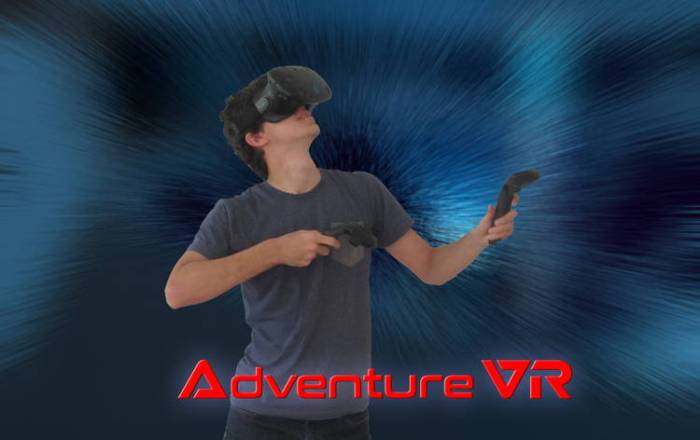
Prepare for liftoff! Virtual Reality Adventures are blasting past the limitations of traditional gaming, catapulting players into breathtaking, interactive worlds. Forget passive screen time; we’re talking about
-experiencing* fantastical landscapes, solving mind-bending puzzles, and battling fearsome foes – all from the comfort (or thrill) of your own home. Get ready to explore the captivating world of VR and discover why it’s revolutionizing entertainment.
From exploring ancient ruins to battling intergalactic dragons, the possibilities within VR adventures are seemingly endless. This journey will delve into the technology behind the immersive magic, the psychological impact on players, and the exciting future innovations on the horizon. We’ll examine successful VR games, discuss the challenges and opportunities of online VR experiences, and even peek into a hypothetical VR adventure game of our own design.
Defining Virtual Reality Adventures
Virtual Reality (VR) adventures offer a captivating escape into immersive digital worlds, transcending the limitations of physical reality. These experiences go beyond simple passive observation, actively engaging users in interactive narratives and challenging gameplay. The defining characteristic lies in the seamless blend of realistic visuals, responsive interactions, and engaging storylines, creating a sense of presence and agency that is unparalleled in other forms of entertainment.VR adventures leverage advanced technology to create a sense of “being there.” This feeling of immersion is crucial to the success of the experience.
The user is not simply watching a story unfold; they are actively participating in it, shaping the narrative through their choices and actions. This active participation differentiates VR adventures from traditional forms of media, creating a far more engaging and memorable experience.
Types of VR Adventures
The versatility of VR technology allows for a wide range of adventure types. These experiences can be categorized based on their primary gameplay mechanics and narrative structures. The diversity ensures there’s a VR adventure for almost every preference.
- Exploration Adventures: These adventures focus on discovering and navigating richly detailed virtual environments. Imagine exploring the ruins of a lost city, trekking across a fantastical alien landscape, or diving into the depths of an ocean teeming with life. The emphasis is on visual spectacle and the joy of discovery.
- Puzzle-Solving Adventures: These adventures challenge players to solve intricate puzzles using the environment and interactive objects. This might involve manipulating virtual objects, deciphering codes, or navigating complex mazes. The satisfaction comes from the mental exertion and the “aha!” moment of solving a particularly difficult puzzle.
- Combat Adventures: These adventures immerse players in intense virtual battles, utilizing motion tracking and haptic feedback to simulate realistic combat scenarios. Players might wield virtual weapons, dodge enemy attacks, and strategize to overcome challenging opponents. The thrill of combat and the visceral feedback are central to these experiences.
Technological Elements of Immersive VR Experiences
Several key technologies combine to create truly immersive VR adventures. These advancements are crucial in generating the sense of presence and agency that defines the genre.
- Head-Mounted Displays (HMDs): These devices are the cornerstone of VR, providing high-resolution stereoscopic displays that create the illusion of depth and immersion. Advanced HMDs offer high refresh rates to minimize motion sickness and improve visual fidelity.
- Motion Tracking: Sophisticated motion tracking systems accurately capture the user’s head and body movements, translating these movements into the virtual world in real-time. This allows for natural interaction with the environment and objects within it.
- Haptic Feedback: Haptic devices provide tactile feedback, enhancing the sense of immersion by simulating physical sensations. This might involve feeling the recoil of a virtual weapon, the texture of a virtual object, or the impact of a collision.
- Spatial Audio: Immersive spatial audio creates a realistic soundscape, enhancing the sense of presence by accurately placing sounds in the virtual environment. This allows for a more believable and engaging experience.
The Appeal of VR Adventures
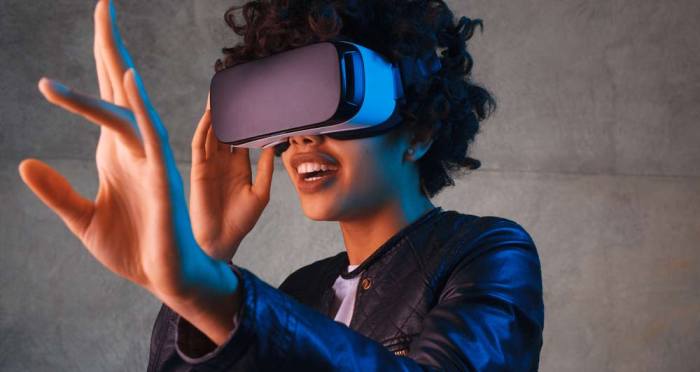
The allure of virtual reality adventures stems from their unparalleled ability to transport players into entirely new worlds, offering experiences far beyond the limitations of traditional gaming. This immersive quality, combined with innovative gameplay mechanics and compelling narratives, has fueled the explosive growth of the VR adventure genre. The sense of presence and agency offered by VR is a key differentiator, leading to a deeper engagement and more memorable experiences.The immersive qualities of VR adventures significantly surpass those of traditional gaming.
While traditional games rely primarily on visual and auditory cues to create a sense of immersion, VR leverages a multitude of sensory inputs, including spatial awareness, physical interaction, and even haptic feedback. This multi-sensory engagement creates a far more believable and visceral experience, blurring the lines between the virtual and the real. The player isn’t just watching a story unfold; they are actively participating in it, physically moving through the environment and interacting with objects and characters in a way that feels remarkably natural.
Immersive Environments and Interactive Storytelling
VR adventures excel at crafting detailed and believable virtual worlds. Highly realistic graphics, coupled with sophisticated sound design and physics engines, create environments that feel convincingly real. This realism is further enhanced by the player’s ability to physically explore these environments, fostering a deeper connection with the game world and its inhabitants. The interactive nature of storytelling in VR also contributes significantly to its appeal.
Players are not passive observers; their choices directly influence the narrative, leading to unique and personalized experiences. This level of agency empowers players and enhances their sense of investment in the game’s story.
Successful VR Adventure Games and Their Appeal
Several VR adventure games have achieved remarkable success, showcasing the genre’s potential. For example,
Half-Life
Alyx* captivated players with its gripping narrative, innovative gameplay mechanics, and stunningly realistic environments. The game’s intricate level design, coupled with its immersive physics engine, allowed players to interact with the world in a deeply satisfying way, creating a truly unforgettable experience. The success of
Half-Life
Alyx* highlights the importance of a compelling narrative and well-designed gameplay in a VR adventure. Similarly,Resident Evil 4 VR* demonstrated how classic games can be successfully reimagined for VR, leveraging the medium’s unique capabilities to enhance the horror and suspense. The visceral experience of dodging enemies and solving puzzles in a fully immersive 3D environment significantly elevated the original game’s atmosphere and engagement.
VR Adventures and Online Games
The rise of virtual reality (VR) has significantly impacted the gaming landscape, blurring the lines between traditional online games and immersive VR experiences. While both offer multiplayer interactions, the fundamental differences in how players engage and interact create unique challenges and opportunities. This section will explore these distinctions and delve into the potential of online VR adventures.
Online games, typically played on PCs or consoles, rely on 2D interfaces and represent interactions through visual and auditory cues. VR adventures, on the other hand, offer a far more immersive experience, placing players directly within the game world. This fundamental difference in interaction profoundly impacts the multiplayer experience.
Multiplayer Aspects: A Comparison
Comparing the multiplayer aspects reveals key differences. Traditional online games often utilize text chat, voice communication, and shared in-game spaces for interaction. Players collaborate or compete within a shared 2D environment. VR adventures, however, offer a far more nuanced level of interaction. Players can physically interact with each other, collaborate more naturally using gestures and spatial awareness, and experience a far greater sense of presence and shared experience.
The sense of embodiment and spatial awareness within VR creates a deeper connection and facilitates more intuitive teamwork or competition. Consider the difference between typing a command to attack an enemy in a traditional MMORPG versus physically wielding a virtual weapon in a VR environment. The latter offers a far more visceral and immersive experience.
Unique Challenges and Opportunities in Online VR Adventures
The unique nature of online VR adventures presents both significant challenges and exciting opportunities. Challenges include the need for robust and low-latency networking to ensure smooth and responsive gameplay for all participants. Developing intuitive and comfortable VR interactions is also crucial, as clunky controls can quickly detract from the immersive experience. Moreover, designing game mechanics that effectively leverage the unique capabilities of VR, such as spatial awareness and physical interaction, requires careful consideration.
The potential for motion sickness and accessibility issues for players also needs to be addressed. Despite these challenges, the opportunities are immense. The increased immersion and realism offered by VR can create deeply engaging and memorable multiplayer experiences, fostering stronger social connections among players. The potential for novel gameplay mechanics and interactive narratives is also significantly expanded.
Hypothetical Online VR Adventure Game: “Echoes of the Aetherium”
Let’s imagine “Echoes of the Aetherium,” a cooperative online VR adventure set in a vibrant fantasy world. Players, as skilled Aetherium mages, explore ancient ruins, solve complex puzzles, and battle formidable creatures, all while collaborating closely with each other. The game will utilize intuitive motion controls for spellcasting and combat, incorporating spatial puzzles that require players to physically interact with their environment.
The narrative will unfold dynamically based on player choices and actions, ensuring a high degree of replayability.
| Feature | Target Audience | Monetization Strategy | Potential Challenges |
|---|---|---|---|
| Cooperative gameplay, immersive VR environment, dynamic narrative | Fans of cooperative fantasy games, VR enthusiasts, players seeking immersive experiences | Premium game purchase with optional cosmetic microtransactions | Developing seamless multiplayer interactions, managing motion sickness, ensuring accessibility for diverse players |
| Intuitive motion controls, spatial puzzles, challenging combat encounters | Experienced gamers comfortable with VR technology, players who enjoy problem-solving | Expansion packs with new content and challenges | Balancing difficulty, preventing exploits, maintaining server stability under high load |
| Stunning visuals, detailed environments, original soundtrack | Players who value high-quality graphics and immersive sound design | Subscription model for access to exclusive content and features | Maintaining high visual fidelity across various VR headsets, optimizing performance for different hardware configurations |
| Dynamic world events, player-driven storylines, regular content updates | Players seeking long-term engagement and replayability | In-game currency for cosmetic items and gameplay enhancements | Balancing player agency with narrative coherence, preventing pay-to-win mechanics |
Technological Aspects of VR Adventures
Stepping into the immersive worlds of virtual reality adventures requires a sophisticated interplay of hardware and software. The technology behind these experiences is constantly evolving, pushing the boundaries of what’s possible and shaping the future of interactive entertainment. Understanding these technological foundations is key to appreciating the depth and potential of VR adventures.The creation and enjoyment of VR adventures depend on a complex ecosystem of technologies.
This encompasses both the physical devices that create the immersive experience and the software that designs and powers the virtual worlds.
VR Hardware Components
VR adventures demand specific hardware components to deliver a convincing sense of presence and interaction within a virtual environment. These components work together to track user movement, render realistic visuals, and provide haptic feedback. A lack in any one area can significantly diminish the overall experience.
- Head-Mounted Displays (HMDs): These are the core of the VR experience, providing stereoscopic displays that create the illusion of depth. High-resolution displays, wide fields of view, and low latency are crucial for minimizing motion sickness and maximizing immersion. Examples include the Meta Quest 2, HTC Vive Pro 2, and PlayStation VR2, each offering different levels of resolution, refresh rates, and tracking capabilities.
- Positional Trackers: Accurate tracking of the user’s head and hand movements is vital for realistic interaction within the virtual environment. This can be achieved through various methods, including inside-out tracking (using cameras embedded within the HMD) and outside-in tracking (using external sensors to monitor the user’s position). The accuracy and responsiveness of tracking directly influence the user’s sense of presence and control.
- Controllers and Input Devices: Interactive VR adventures require intuitive control mechanisms. Handheld controllers, often equipped with buttons, joysticks, and haptic feedback, allow users to manipulate virtual objects and interact with the game world. More advanced systems might incorporate gloves with finger tracking or full-body motion capture for even greater immersion.
VR Software Components
The software powering VR adventures is equally critical, encompassing game engines, development tools, and the virtual environments themselves. The software’s efficiency directly affects the quality of the experience, influencing factors like frame rate, rendering quality, and overall performance.
- Game Engines: These provide the foundational framework for building VR experiences. Popular engines like Unity and Unreal Engine offer robust tools and features for creating immersive 3D environments, handling physics simulations, and integrating various input devices. The choice of engine can significantly impact the development process and the final product’s capabilities.
- VR Development Tools and SDKs: Software Development Kits (SDKs) provide developers with the necessary tools and libraries to create VR applications. These SDKs handle aspects like rendering, tracking, and input management, simplifying the development process and ensuring compatibility with various VR hardware platforms. The sophistication of these tools directly affects the ease and efficiency of VR game development.
- Virtual World Design and Development: Creating engaging and immersive virtual environments requires a blend of artistic skill and technical expertise. 3D modeling, texturing, animation, and level design are all critical aspects of bringing a VR adventure to life. The quality of these elements directly determines the user’s overall experience and level of immersion.
Advancements in VR Technology and Their Impact
Advancements in display technology, processing power, and tracking accuracy are constantly pushing the boundaries of VR adventures. Higher resolution displays, faster refresh rates, and more precise tracking lead to more realistic and immersive experiences, reducing motion sickness and enhancing the sense of presence. For example, the move towards foveated rendering, which focuses processing power on the areas of the display the user is directly looking at, allows for higher overall fidelity without significantly increasing computational demands.
This represents a significant leap forward in efficiency and visual quality.
Future Developments in VR Technology
The future of VR adventures is brimming with exciting possibilities. Advancements in haptic technology promise to create more realistic tactile sensations, further enhancing immersion. Improvements in eye-tracking technology could allow for more intuitive interactions and personalized experiences. The integration of advanced AI could lead to more dynamic and responsive virtual worlds, capable of adapting to the player’s actions and choices in unprecedented ways.
Imagine VR adventures that seamlessly integrate physical objects from the real world into the virtual environment, or experiences that use brain-computer interfaces to enhance control and immersion to levels previously unimaginable. The ongoing development of more powerful and efficient hardware, coupled with innovative software solutions, sets the stage for a future where VR adventures are indistinguishable from reality.
The Impact of VR Adventures on Players
Stepping into a virtual world offers more than just entertainment; it’s a profound experience that can significantly impact a player’s psychological and emotional state. The immersive nature of VR adventures creates a powerful sense of presence, blurring the lines between reality and the digital realm. This heightened immersion can lead to a wide range of effects, both positive and negative, influencing players’ moods, behaviors, and even their perceptions of the world around them.VR adventures offer a unique opportunity to explore new environments, interact with virtual characters, and engage in activities that would be impossible or dangerous in the real world.
This can foster a sense of agency and empowerment, particularly for players who might feel limited in their daily lives. The emotional responses elicited by these experiences can be incredibly intense, ranging from exhilaration and joy to fear and anxiety, depending on the game’s design and the player’s individual susceptibility.
Psychological and Emotional Effects of Immersive VR Experiences
The intense immersion provided by VR can trigger strong emotional responses. For example, a player navigating a terrifying haunted house scenario in a VR game might experience a genuine physiological fear response, similar to what they might feel in a real-life haunted house. Conversely, successfully overcoming a challenging virtual obstacle could lead to feelings of accomplishment and self-efficacy that boost confidence and self-esteem.
The emotional intensity of these experiences can be both beneficial and potentially detrimental, depending on the nature of the game and the player’s mental state. Studies have shown that exposure to virtual environments simulating real-world phobias can help reduce anxiety related to those phobias in some individuals, highlighting the therapeutic potential of VR. Conversely, prolonged exposure to violent or stressful virtual scenarios could potentially exacerbate existing anxieties or even trigger new ones in vulnerable individuals.
Therapeutic Applications of VR Adventures
The immersive and controllable nature of VR technology presents significant opportunities for therapeutic applications. VR environments can be designed to simulate real-world scenarios that trigger anxiety or fear, allowing therapists to gradually expose patients to these triggers in a safe and controlled setting. This exposure therapy technique has shown promising results in treating phobias, post-traumatic stress disorder (PTSD), and other anxiety disorders.
For instance, patients with acrophobia (fear of heights) might gradually be exposed to increasingly higher virtual heights, allowing them to confront their fear in a manageable way. Similarly, veterans suffering from PTSD could safely re-experience traumatic events in a virtual environment, enabling them to process their trauma with the support of a therapist. Furthermore, VR can be used for pain management, offering a distraction technique that helps patients cope with chronic pain.
The possibilities for using VR in therapeutic settings are vast and continuously expanding as technology improves.
Potential Benefits and Drawbacks of VR Adventure Games for Players
The impact of VR adventure games is multifaceted. It’s crucial to consider both the potential benefits and drawbacks for players.
Below is a list outlining these aspects:
- Benefits: Enhanced problem-solving skills, improved spatial reasoning, increased empathy through interaction with virtual characters, stress reduction through immersive escapism (when used appropriately), development of new skills (e.g., navigation, strategic thinking), increased physical activity in some games (e.g., those requiring movement), potential therapeutic benefits for anxiety and phobias.
- Drawbacks: Motion sickness and discomfort, eye strain, potential for addiction and excessive screen time, exacerbation of existing mental health issues (anxiety, depression) if not used responsibly, social isolation if used excessively, potential for unrealistic expectations of reality, cost of VR equipment.
Illustrating a VR Adventure Scene
Imagine stepping into a world crafted entirely from light and code, a world where the impossible becomes reality. This is the promise of VR adventures, and to illustrate this, let’s explore a specific scene from a fictional game, “Echoes of the Obsidian Reef.”This scene takes place deep within a submerged, bioluminescent coral reef. The player, a marine biologist named Dr.
Aris Thorne, is investigating a strange energy anomaly emanating from a colossal, ancient shipwreck.
The Submerged City of Xylos
The scene opens with Dr. Thorne, rendered with photorealistic detail, standing amidst towering coral structures that glow with an ethereal, otherworldly light. The coral itself isn’t just passively illuminated; it pulses with a soft, rhythmic glow, casting shifting patterns of light and shadow across the seabed. Schools of iridescent fish, their scales catching the light like scattered jewels, dart through the coral branches, their movements creating a mesmerizing dance of color.
The shipwreck, a colossal vessel of obsidian-like material, lies partially buried in the sand, its skeletal remains hinting at a forgotten civilization. A faint, almost imperceptible hum vibrates through the water, felt more than heard, a resonance that seems to emanate from the wreck itself. The water itself is surprisingly clear, allowing for an almost unlimited visibility, but a subtle current pushes gently against Dr.
Thorne, adding a sense of unease to the otherwise beautiful scene. The air (or rather, the simulated sensation of air in the VR headset) carries a faint scent of brine and ozone, a unique smell only found in the deepest parts of the ocean. The texture of the water, felt through haptic feedback gloves, is cool and slightly viscous, a sensation that contrasts sharply with the rough texture of the coral Dr.
Thorne occasionally brushes against.
Visual Composition and Lighting
The scene is composed using a three-point lighting system. A primary light source, representing the bioluminescence of the coral, casts a soft, diffused glow across the entire scene. A secondary light source, a more focused beam emanating from Dr. Thorne’s underwater lamp, illuminates the immediate area around her, providing sharper details and highlighting textures. Finally, a subtle backlighting effect, originating from the energy anomaly within the shipwreck, casts a faint, ghostly glow on the obsidian hull, adding depth and mystery to the scene.
The color palette is dominated by deep blues and greens, punctuated by the vibrant hues of the bioluminescent coral and the shimmering scales of the fish. The overall mood is one of awe and wonder, tempered by a sense of foreboding, a feeling amplified by the dark shadows cast by the massive shipwreck. The perspective is slightly elevated, offering a panoramic view of the reef and the shipwreck, while still maintaining a sense of intimacy around the player character.
The scene is meticulously detailed, with each coral polyp, each fish scale, and each crack in the obsidian hull rendered with astonishing realism. The visual style aims for photorealism, enhanced by subtle particle effects simulating the movement of water and the shimmering light.
The Future of VR Adventures
The virtual reality adventure game market is poised for explosive growth, driven by advancements in technology and a growing appetite for immersive experiences. We’re moving beyond simple gaming; VR adventures are becoming sophisticated tools for training, education, and even therapy. The next decade will witness a profound transformation in how we interact with and experience virtual worlds.The integration of various technologies will significantly shape the future of VR adventures.
This will lead to more realistic, responsive, and personalized experiences for players, blurring the lines between the virtual and the real.
Technological Convergence in VR Adventures
The future of VR adventures hinges on the seamless integration of various technologies. Imagine a VR adventure where your actions in the virtual world directly influence your physical environment through augmented reality (AR) overlays. For example, you could be battling a virtual dragon in your living room, with the dragon’s fiery breath projected onto your walls using AR technology.
Simultaneously, advanced artificial intelligence (AI) will power more sophisticated non-player characters (NPCs) with realistic behaviors and dynamic interactions, creating truly unpredictable and engaging gameplay. Haptic suits will further enhance immersion by providing tactile feedback, making the virtual world feel tangible. This convergence will result in experiences that are far more believable and engaging than anything currently available.
A Timeline for VR Adventure Evolution (Next 10 Years)
Predicting the future is always challenging, but based on current trends and technological advancements, a plausible timeline for VR adventure evolution can be constructed.
This timeline highlights key milestones, noting that the pace of development may vary.
| Year | Milestone | Example/Real-life Case |
|---|---|---|
| 2024-2025 | Widespread adoption of higher-resolution VR headsets with improved ergonomics and tracking. | Similar to the progression from early VR headsets like the Oculus Rift DK1 to the current Quest 2, with a focus on comfort and higher fidelity visuals. |
| 2026-2027 | Increased integration of haptic feedback suits and advanced motion tracking systems for enhanced realism. | Companies like Teslasuit are already developing full-body haptic suits. Further integration into gaming experiences will be key. |
| 2028-2029 | Significant advancements in AI for creating more realistic and engaging NPCs with dynamic behaviors. | Current AI advancements in games like “Red Dead Redemption 2” provide a basis for future improvements, leading to more sophisticated interactions. |
| 2030-2033 | Mainstream adoption of AR/VR hybrid experiences, blurring the lines between virtual and real worlds. | Imagine a game where you explore a virtual forest, but the trees are overlaid onto your real-world backyard using AR technology. |
| 2034 | Emergence of fully immersive VR adventures with near-photorealistic graphics and seamless integration of multiple technologies. | This represents a theoretical peak, but the direction is toward ever-increasing realism and integration. |
Ending Remarks
So, buckle up for the ride! Virtual Reality Adventures are more than just games; they are transformative experiences pushing the boundaries of what’s possible in interactive entertainment. As technology continues its rapid evolution, the immersive worlds of VR promise even more breathtaking adventures, blurring the lines between reality and fantasy. The future is immersive, and it’s incredibly exciting.
Essential Questionnaire
What kind of hardware do I need for VR adventures?
You’ll need a VR headset (like Oculus Rift, HTC Vive, or Meta Quest), a powerful computer (for PC VR), and possibly motion controllers depending on the game.
Are VR adventures physically demanding?
It depends on the game! Some are relaxing exploration experiences, while others involve intense physical activity, requiring you to move around your play space. Always check the game’s description.
Can I play VR adventures with friends?
Many VR adventures offer multiplayer options, allowing you to team up with friends for cooperative gameplay or compete against each other. Check the game’s features for multiplayer capabilities.
Are VR adventures safe?
Generally yes, but it’s crucial to follow safety guidelines provided by the game and your VR headset manufacturer. Ensure you have enough space to move around safely and take breaks to avoid motion sickness.